

“Although often ten or more feet in height, the plants [Musa Ensete] were practically trunkless, the leaves arising from a great cradle formed by the old leaf bases, to which age had imparted a dead crimson colour. Beside the small plant presses these leaves indeed presented a botanist's dilemma. We found many such dilemmas on the mountain.”
-Journal of the Royal Horticultural Society
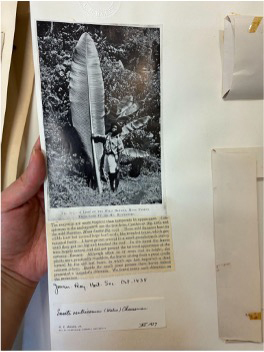
The title, A Botanist’s Dilemma, comes from a 1938 journal describing a massive false banana leaf on Mount Ruwenzori in Uganda. Almost three times the height of a person, it only posed as a dilemma for the botanist since it resisted collection. The exhibition and installation at Cornell Botanic Gardens celebrates this resistance: the banana plant’s natural characteristics refuse for it to be categorized or contained. In my work, materials such as abaca’s interaction with ceramics similarly resist the flatness I tried to impose on it, shaping itself instead. I see two banana plants—the false banana (Ensete ventricosum) and abaca (Musa textilis)—as teachers. Through them, I am learning how to adapt, to remain responsive, and to navigate displacement. Their ability to endure, transform, and resist offers a way of thinking about survival—one that extends beyond the garden and into lived experience.
Botanical gardens are not neutral spaces. They are shaped by histories of colonial extraction, classification, and control. This context informs how plants are collected, displayed, and maintained, often far removed from their original ecosystems and cultural meanings.
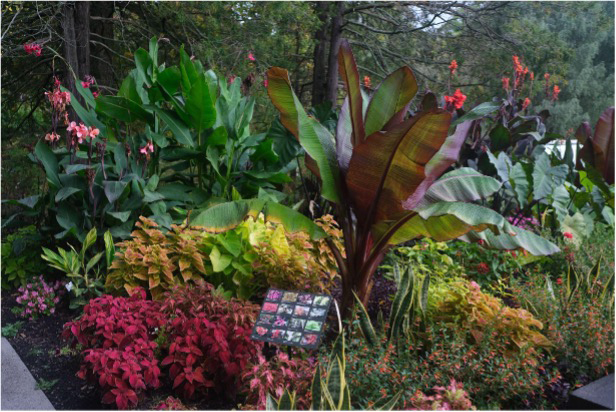
I first encountered the banana trees at Cornell Botanic Gardens in Sonja Skelly’s Annuals and Perennials class. We learned directly about the plants from the gardeners who care for them. I was immediately drawn to the tropical garden since it reminded me of flora from the Philippines, where I was born in and had lived for the past ten years. Interacting with the tropical plants here felt as if I had come across a long-lost friend or neighbor.
In the Philippines, banana trees are deeply woven into daily life. Their leaves are used for cooking and eating, their fruit provides sustenance, and the plants themselves line roadsides as quiet markers of home. Encountering them in Ithaca—removed from those relationships—sparked both a desire to protect them and a renewed appreciation for something I had once taken for granted.
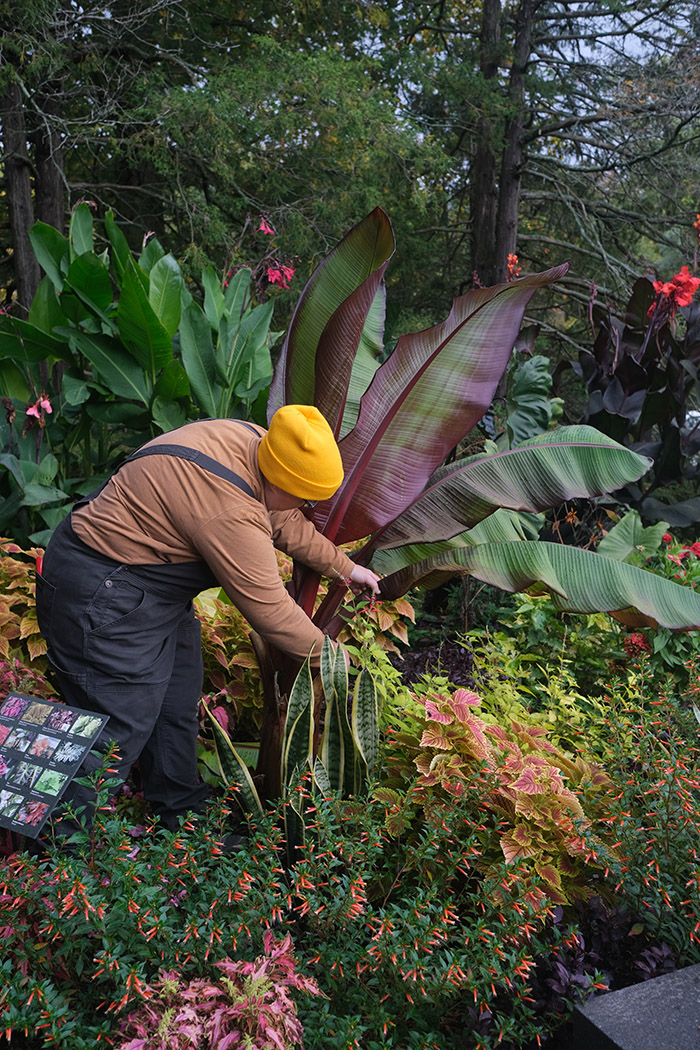
This sense of connection guided my material research at Cornell. I worked and volunteered with Melissa Cox, the caretaker of the tropical garden, assisting with the cultivation of its plants over the course of a year. I learned that in preparation for winter, the banana plants and other tropical species are dug up and moved into the greenhouse. Because of limited space, only the bulb or main stem is kept; the leaves are cut and discarded for compost. In the greenhouse, the plants regrow their leaves safely through the colder months.
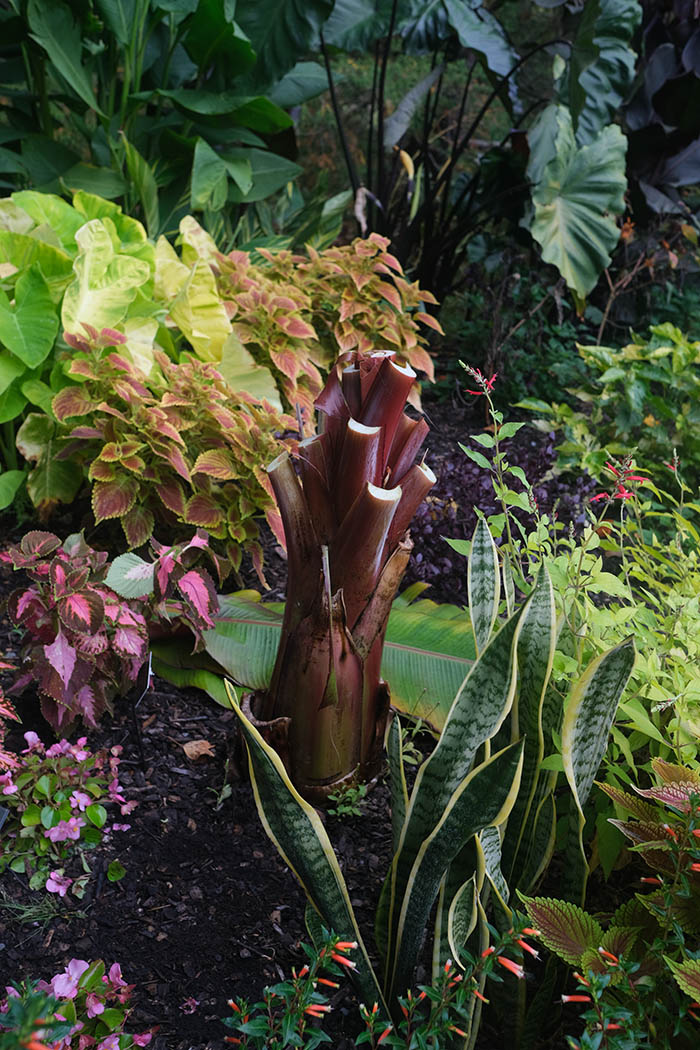
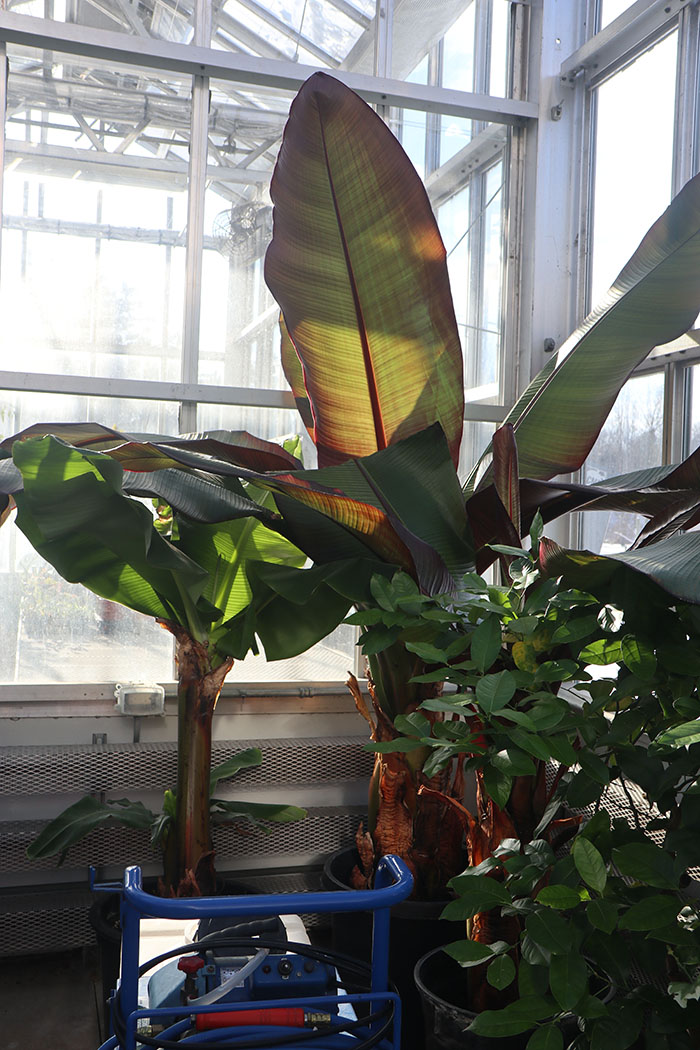
The journey these plants undergo even just within the confines of the Cornell Botanic gardens fascinated me. I asked if I could collect the discarded banana leaves and use them in my art studio. I realized that if I wanted to learn from the plant, I needed to work with it directly: through observation and placing it in conversation with other materials.
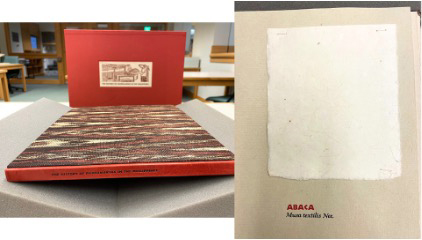
At the same time, I was enrolled in a class on Indigenous Materiality with Professor Jolene Rickard, who encouraged research into Indigenous art forms from the Philippines. I was reminded of t’nalak, a woven fabric created by the T’boli people using abaca, or Musa textilis, a species of banana plant native to the Philippines. Unlike common banana plants, abaca is not valued for its fruit but for its strong fibers.
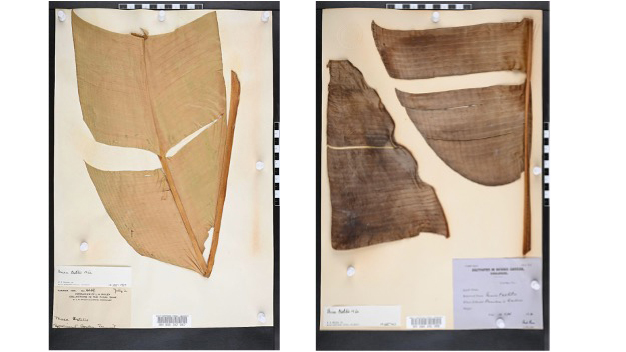
Abaca has a long and complex history. Once known as “Manila hemp” (despite having no relation to hemp), it was widely used for rope and cordage, particularly by naval forces, because of its durability in saltwater. Before the invention of synthetic materials, it was highly prized and served as a vital commodity. Old ropes were later repurposed into paper, giving rise to the term “Manila paper” and eventually “Manila envelope.” Today, abaca is used in currency, tea bags, and remains a staple material in papermaking because of its strength.
Recognizing the shared lineage between abaca and the false banana plants in the garden, I used this connection as both a material and conceptual framework. I worked with abaca pulp (a slurry of broken down fibers mixed with water) and pressed it onto the false banana leaves I had collected from the garden.
The leaves acted as molds, imprinting their textures and forms onto the paper made out of abaca. As the abaca fibers dried, they shrank and fused together, producing surfaces that resembled shedded snake skin or parchment.
I experimented with different leaves, each producing distinct forms as they dried. In one instance, I attempted to flatten the abaca sheets by weighing them down with ceramic pieces. Instead, the material wrapped itself around the ceramics, shrinking tightly until it appeared fused to their surface. This unexpected outcome shifted my approach. The abaca behaved almost like a living material, resisting control and asserting its own form.
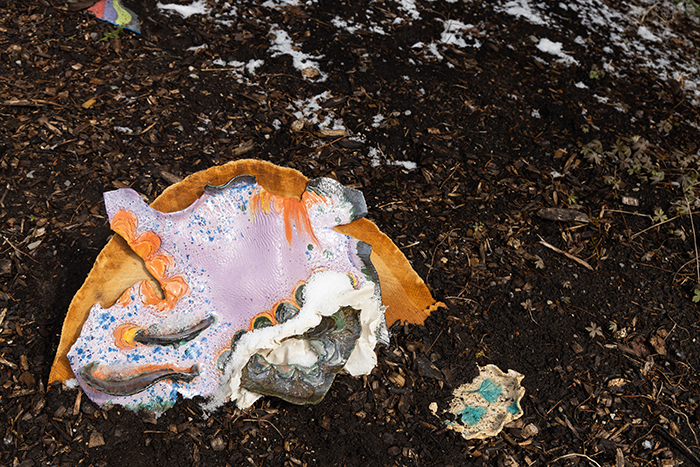
This discovery informed my installation at Cornell Botanic Gardens. Installed in April 2026 within the tropical bed, the work gestures toward what is to come: a nod to the upcoming growth of the plants returning in May. The abaca forms, wrapped around ceramic structures, resemble mushrooms or organic growths emerging from the soil. Some ceramic elements echo the cut bases of banana trees, while others appear to sprout upward, gradually revealing themselves in the garden space.
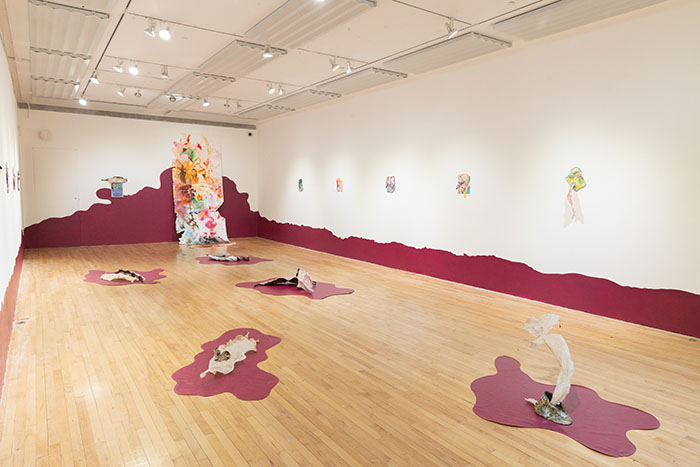
The installation reflects my care and connection to banana plants and other tropical species living far from their native environments. Through this work, I aim to reframe the banana plant as a living subject rather than a resource. The acts of wrapping and covering become gestures of care- attempts to restore what has been overlooked and to imagine new relationships with plant life.
Faye Louise Pamintuan graduated with a Master's in Fine Arts (MFA) from the Cornell College of Art, Architecture and Planning in 2026.