

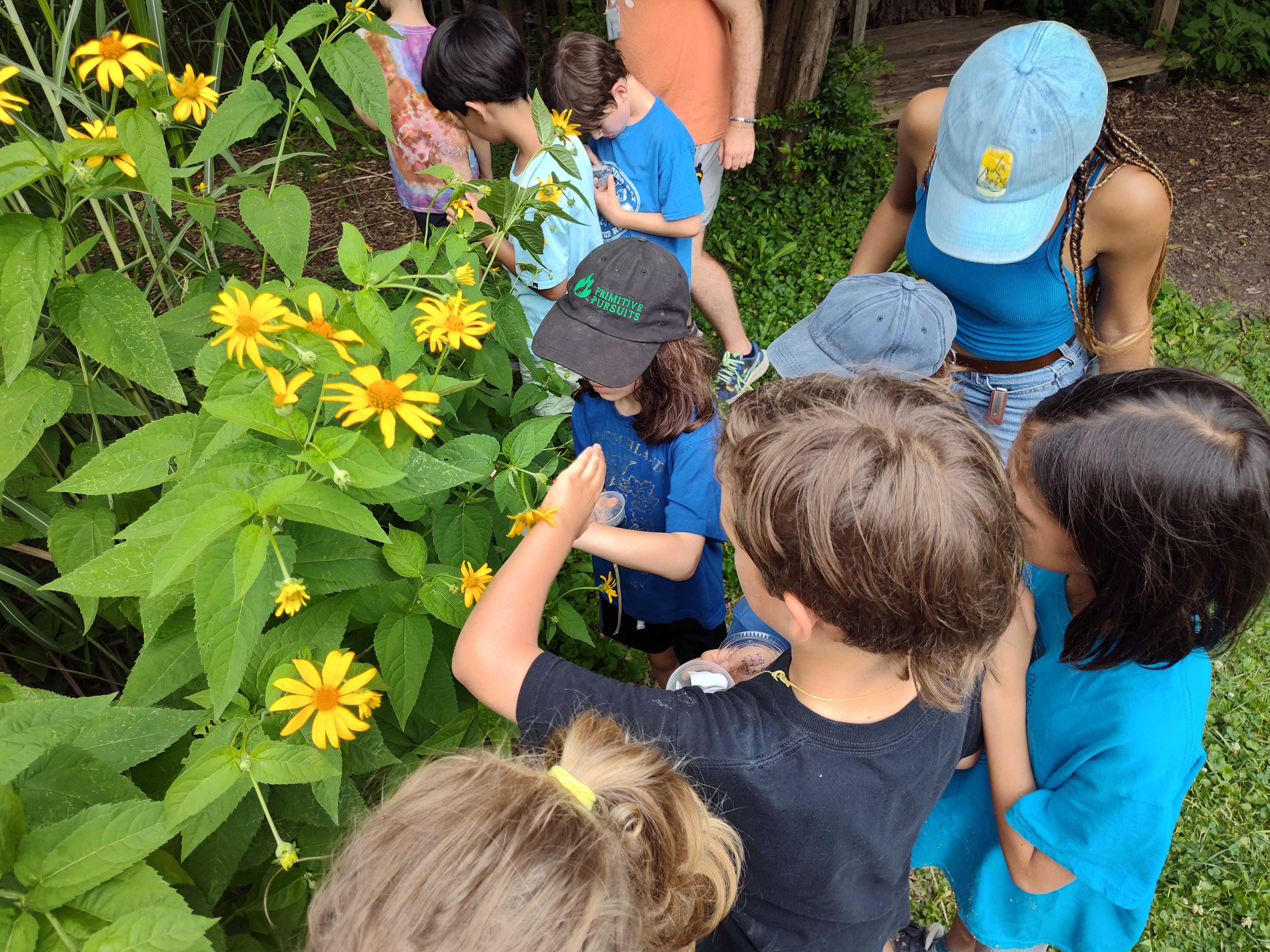
What do ladybugs have to do with plants? Through an outreach program to Ithaca Children's Garden, the Youth Education team at Cornell Botanic Gardens sought to spark curiosity in youth and teach summer campers about the importance of ladybugs as biological control agents that promote plant health by controlling plant-eating insect populations. Cornell Botanic Gardens is devoted to conservation efforts and teaching youth about ladybugs emphasizes the importance of ecosystem health as well as plant and animal diversity.
On July 17th, Youth Education Coordinator Lauren Salzman and I went to Ithaca Children's Garden to be in the morning rotation of summer camp activities.
We started with a discussion about ladybugs and their life cycles, closely observing them as adults and larvae. Youth were shocked to learn that these tiny larvae can eat up to 400 sap-sucking aphids during this stage! This was followed by an interactive game of Sharks and Minnows where youth reenacted these relationships instead as “ladybugs” and “aphids.” This emphasized how ladybugs protect plants from harmful pests. Finally, we ended the session with a ladybug release. We were given rare native nine-spotted and two-spotted lady beetles to release back into the environment. Unfortunately, these native insects have become “lost” due to competition from exotic ladybugs and habitat loss. The impact of losing this diversity on the environment remains unclear. However, the Lost Ladybug Project, a Cornell Lab that engages the public through education and citizen science while conducting research related to “lost” lady beetles, is using data collection to determine this impact. For more information about their projects visit http://www.lostladybug.org/.
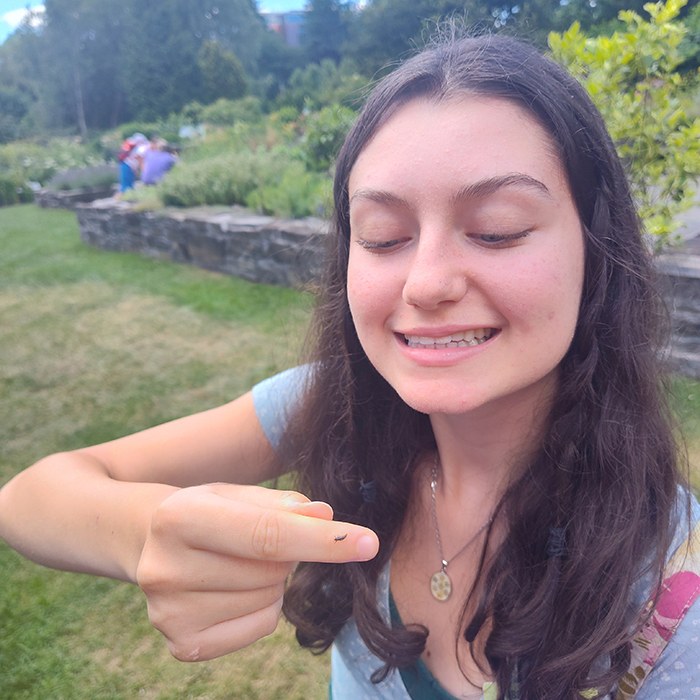
The program was a success and I noticed immediate connections. Not only did youth get the chance to learn from us, but they were able to engage hands on and connect this experience to their own lives by hypothesizing what kinds of lady beetles wander into their homes in the winter and discerning what plants will best suit the needs of their ladybugs. As part of the Lost Ladybug Project’s mission, youth are encouraged to take photos of rare ladybugs that they see in their environment. Youth become a part of the scientific community through this task and value the importance of science in rehabilitating our natural world.
This experience has taught me that outreach is an extremely efficient way to share the educational opportunities I come across at the Botanic Gardens. Using these connections we are able to educate and share our resources with youth in the community.
-Abby Weissinger ‘26
Learning by Leading Youth Education Co-Leader