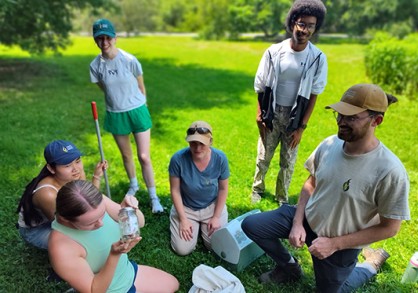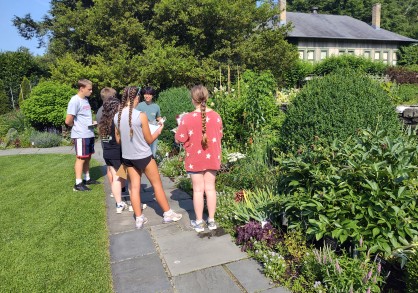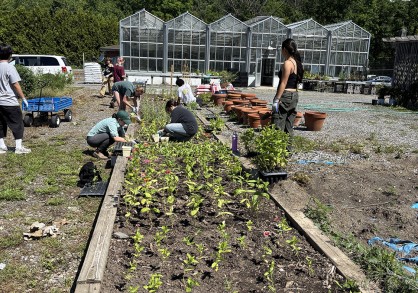
In early July, the Learning by Leading Co-Leaders and mentors set out to explore local ecosystems alongside Botanic Gardens Botanist Robert Wesley. After a week of excruciating heat, retreating into the cool shade of the forests and walking through bogs proved to be a refreshing, restorative adventure.
Even after hearing several descriptions of what the legendary "Bog Day" entails, nothing could have prepared us for this otherworldly experience. Not only was I able to see peat moss in its natural habitat, I experienced the closest thing to walking on a cloud. With every step forward, we trusted a delicate layer of Sphagnum moss to keep us afloat above the muddy waters. Yet with every cautious step, our courage was rewarded. The bog was lined with bushes of wild blueberries (Vaccinium corymbosum) — the perfect snack for us and our avian relatives.
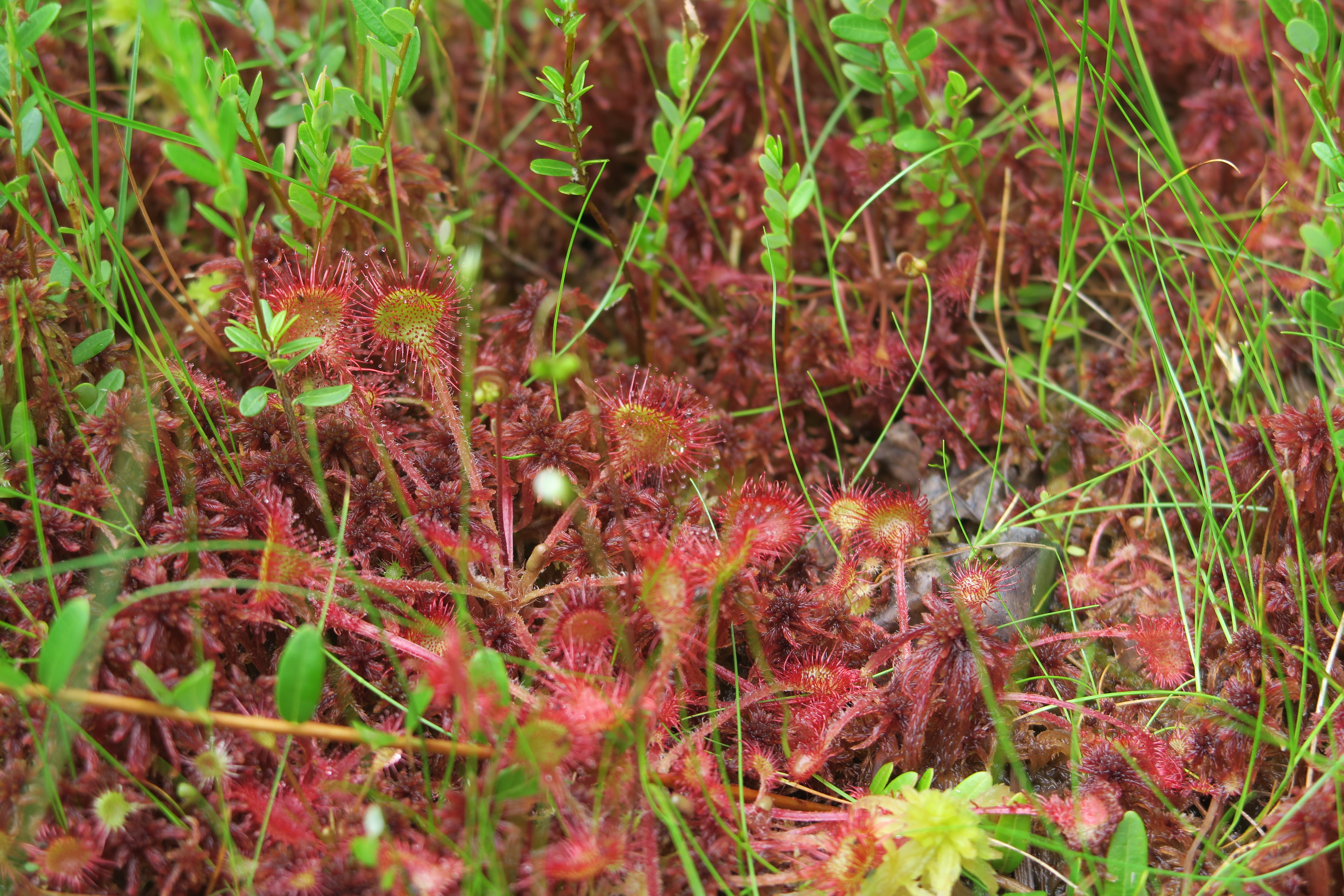
Bouncing across the spongy peat, I felt transported to another realm. We were surrounded by vibrant flora like Sarracenia purpurea (purple pitcher plant), Pinus strobus (eastern white pine), and my personal new favorite, Drosera intermedia (sundew). I couldn't help but envy the toads and insects seeking shelter within these intricate, stylish plants. At the second bog, we were even greeted by a field full of wild orchids — a truly rare and memorable sight.
As a Garden Ambassador Co-Lead, I spend much of my time around the Lewis Building and the cultivated grounds surrounding the Nevin Welcome Center. Throughout this summer, I've developed a deep awe for the sheer breadth of the Cornell Botanic Gardens’ initiatives. Experiencing these unique habitats firsthand has informed my goals for the academic year. I hope to help bridge the gap between cultivated spaces and wild environments, increasing student engagement across both on and off-campus natural areas.