

Sharp-Lobed Hepatica
Hepatica acutiloba
Ranunculaceae
Growth Habit
HerbaceousPropagation
Seed Treatment and Storage: Keep seeds moist. Sow immediately or warm/moist then cold/moist stratification
Biocultural Value
The Iroquois, Menominee, Cherokee, and Meskwaki all used sharp-lobed hepatica. The Haudenosaunee and Cherokeee both employed a decoction of the plant as an analgesic. One or more of the above groups also used decoctions or infusions of the plant as a gynecological aid, gastrointestinal medicine, contraceptive, and pediatric remedy.
Wildlife Value
Hepatica blooms so early that butterflies, moths, and hummingbirds are not present for pollination. Instead, the plant's nectarless flowers are primarily pollinated by small carpenter bees (Ceratina spp.) and sweat bees (Lasioglossum spp.). Mining bees (Andrena spp.) occasionally pollinate these flowers but prefer nectar-producing plants that flower concurrently (e.g. trout lilies - Erythronium spp.).
Location
Fall Creek Gorge, McDaniel Meadow, Woods, and Swamp, Ringwood Ponds, Tarr-Young Preserve, Mundy Wildflower GardenCultivation
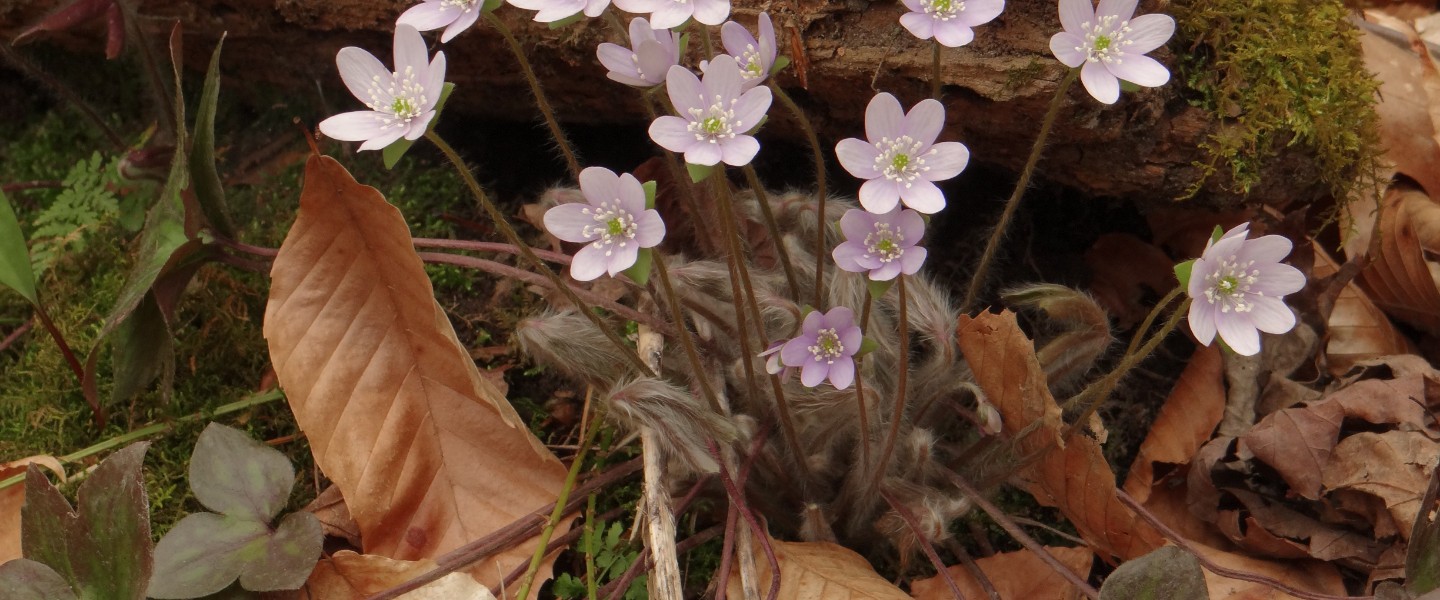
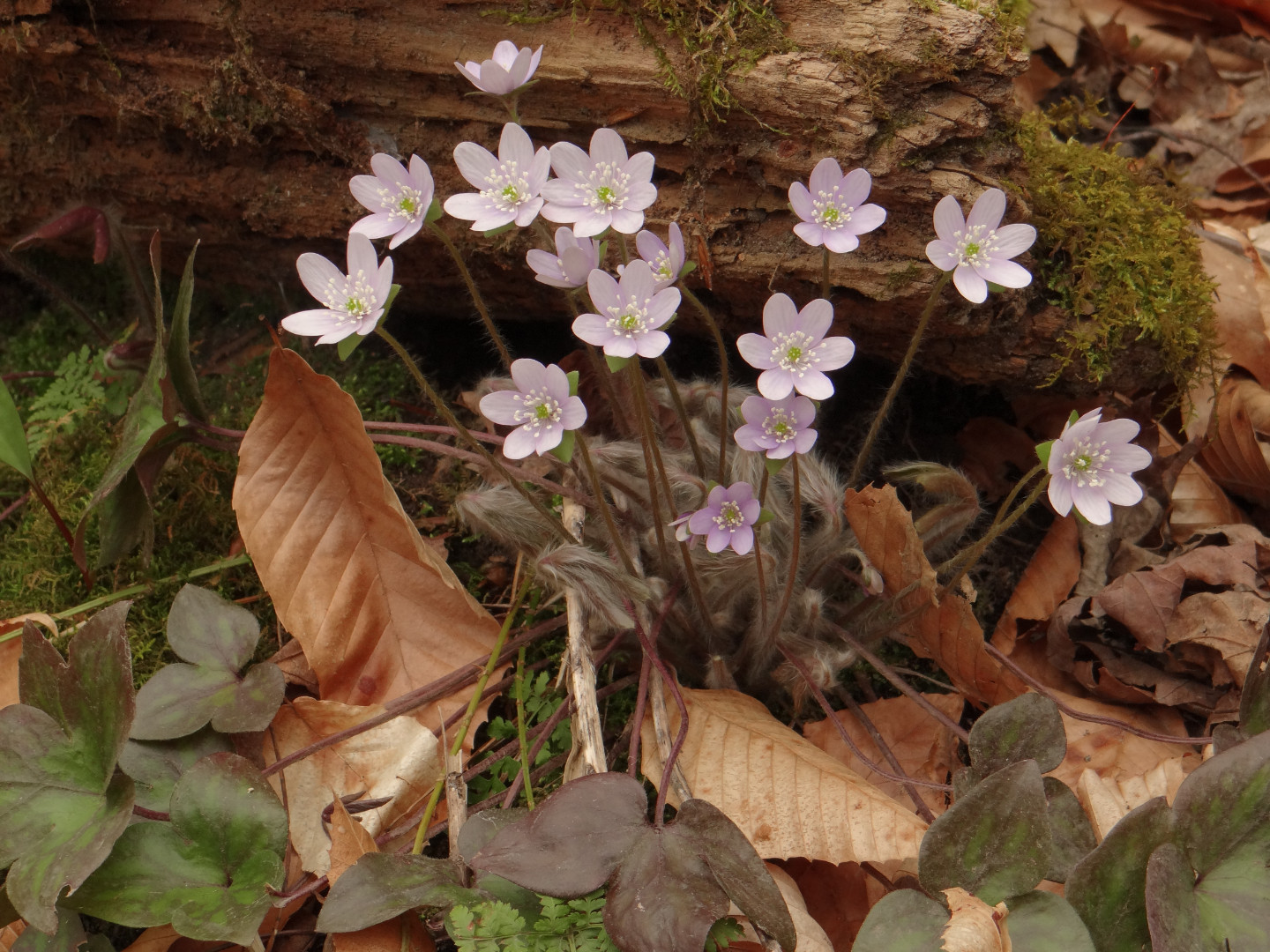
A 3-6" tall plant with white (sometimes pink-blue) flowers and three-lobed leaves.
Light: shade to part shade
Moisture and Soil: dry to moist well-drained soil
Special characteristics
Hepatica's evergreen, three-lobed leaves have long been associated with the liver, or Hepatic system, under the “Doctrine of Signatures” approach to medicine. Hepatica flowers have no nectar, but the pollen is important food for native bees.Climate Change Sensitivity
Over the period from 1986 to 2015, Hepatica acutiloba bloomed an average of 11.6 days earlier.Status
L4|S5|G5

