

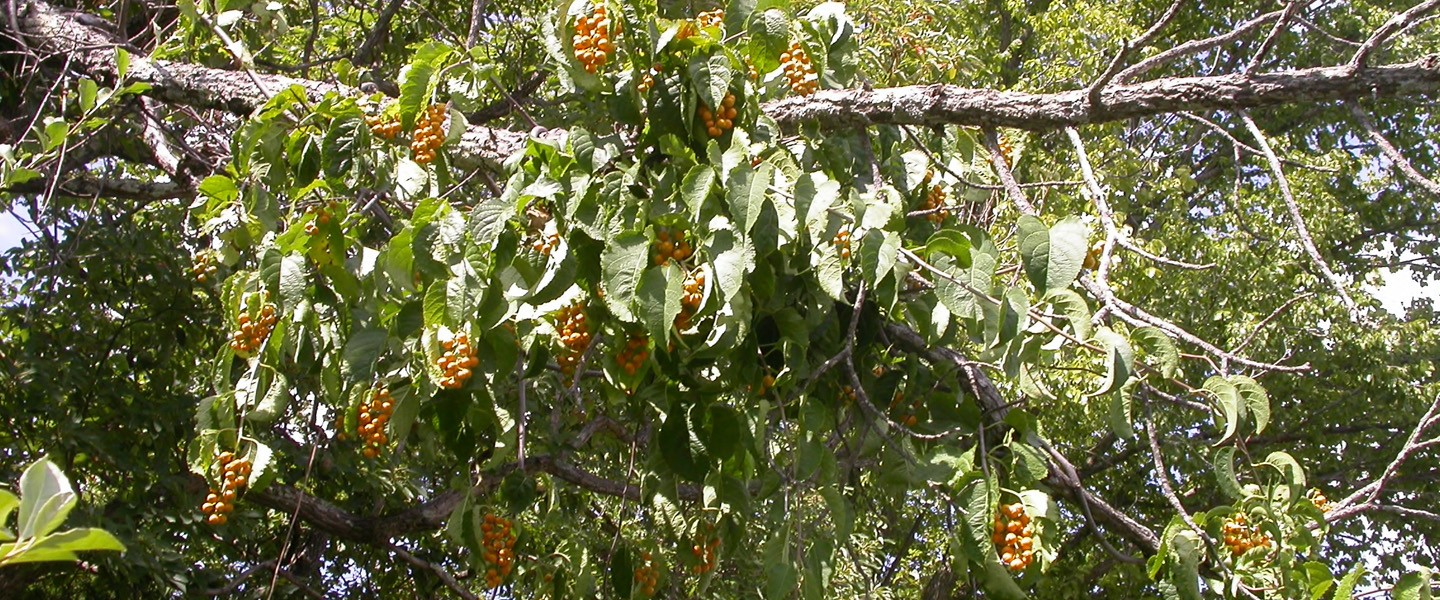
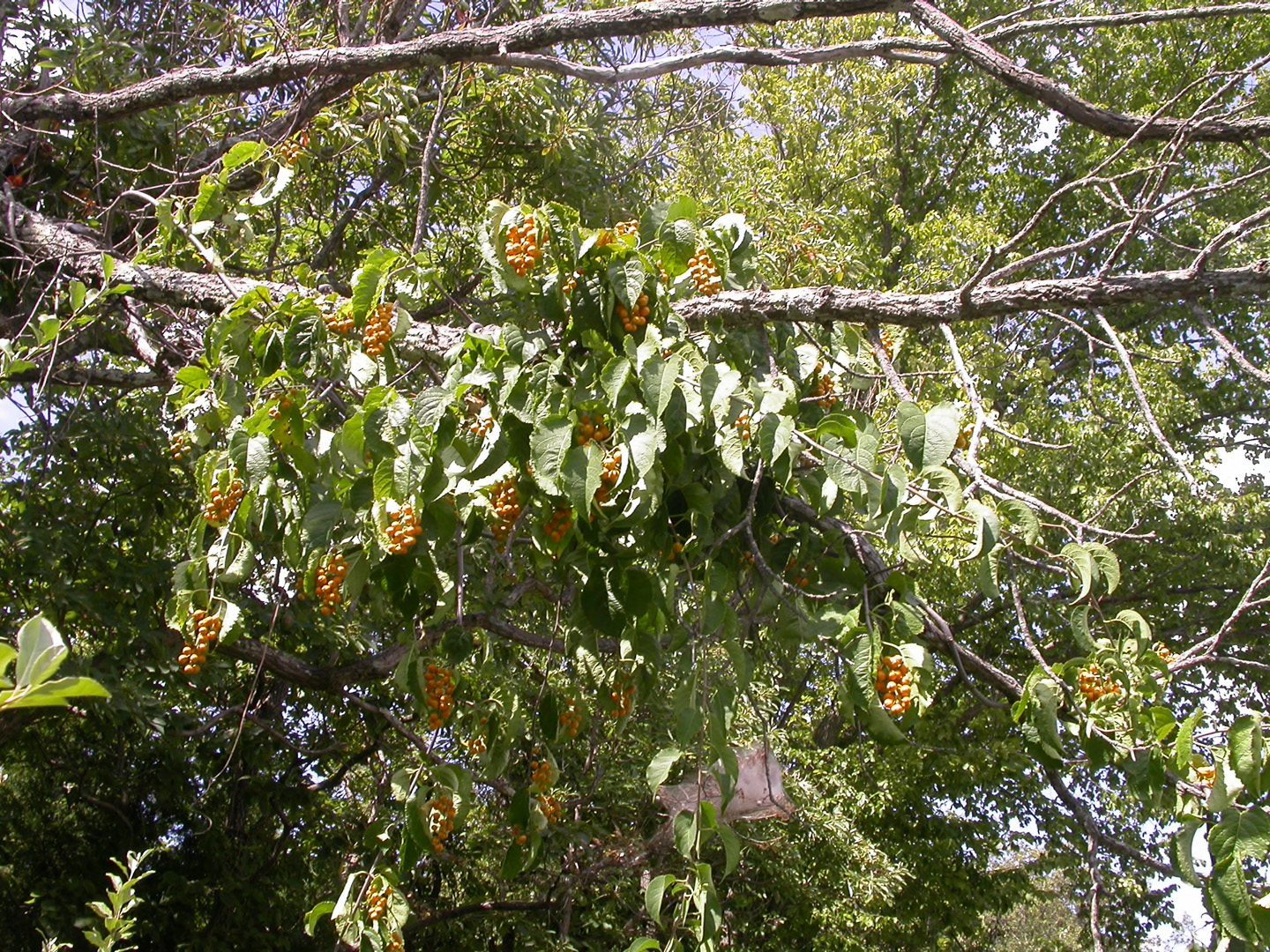
American Bittersweet
Propagation
sow fresh or cold/moist stratify for 150 days
Biocultural Value
The root is diaphoretic, diuretic and emetic. It is a folk remedy for chronic liver and skin ailments including skin cancer, rheumatism, leucorrhoea, dysentery and suppressed menses. A strong compound infusion, usually combined with raspberry leaf tea, is used to reduce the pain of childbirth. A poultice of the boiled is used to treat obstinate sores, skin eruptions etc. Externally, the bark is used as an ointment on burns, scrapes and skin eruptions. Extracts of the bark are thought to be cardioactive. It may be poisonous to humans and there are reports of horses being poisoned from eating the leaves (McGregor et al. 1986).
Wildlife Value
Birds are fond of showy red fruits and they provide a food source through the winter as well as attractive interest in the landscape. At least 15 bird species eat its fruit.
Poisonous
YesLocation
Cayuta Lake, Edwards Lake Cliffs Preserve, Fall Creek Gorge, Mundy Wildflower GardenCultivation
med-dry, sun-pt shade

