

American Stoneseed
Growth Habit
HerbaceousWildlife Value
Few studies have been conducted regarding this uncommon plant's faunal associations, but its flower structure suggests that pollinators are long-tongued bees and butterflies.
Location
Mundy Wildflower GardenCultivation
Description
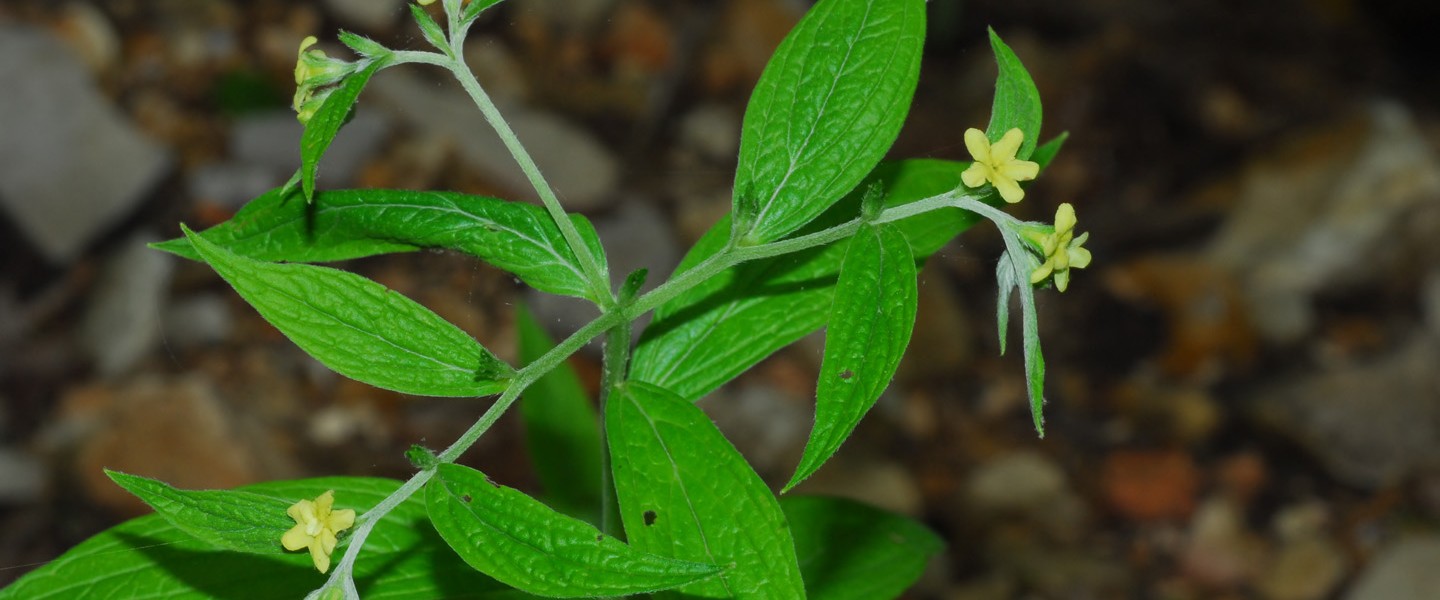
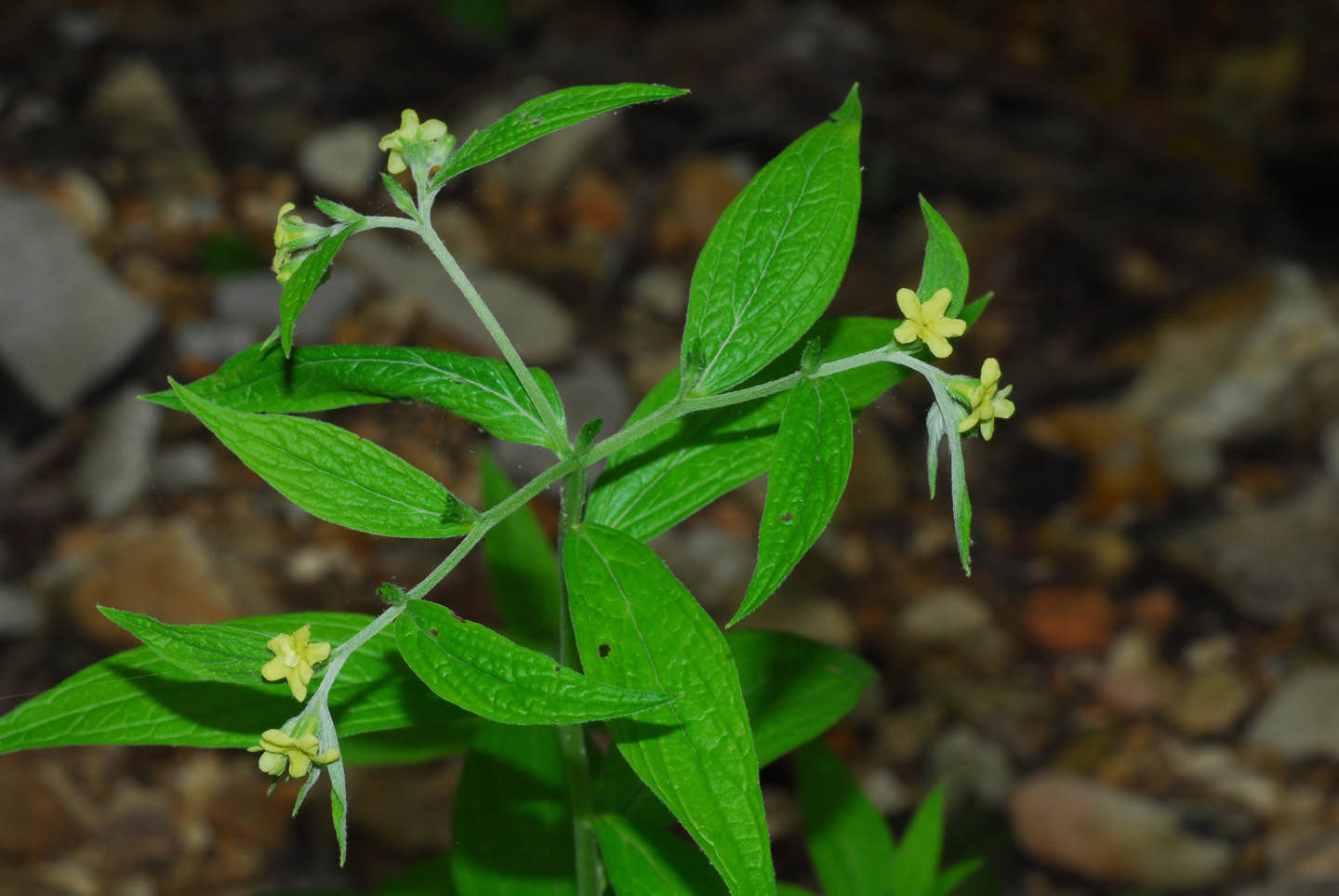
This perennial plant is about 1½“2½' tall, branching occasionally. The stems are light green and densely covered with white hairs. The alternate leaves are up to 5½" long and 2" across; they are lanceolate to ovate, smooth along the margins, and sessile. The upper surface of each leaf is dark green, sparsely covered with short hairs, and pinnately veined; the lower surface is light green and densely covered with short white hairs. The lateral veins are conspicuous on both sides of the leaves. The flowers bloom near the apex of the stems. They occur individually from the axils of the leaves; their pedicels are short. Each flower is about ¼" across, consisting of a hairy green calyx with 5 linear-lanceolate teeth and a pale yellow corolla with 5 spreading lobes and a narrow throat. The tube of the corolla is no longer than the teeth of the calyx. The reproductive organs are hidden within the corolla. The blooming period occurs from mid-spring to early summer. Only a few flowers are in bloom at the same time. They are replaced by ovoid-globoid nutlets with an outer coat that is white, smooth, and hard. The root system consists of a taproot, which may send up more than one s
Source of plant
Unknown

