

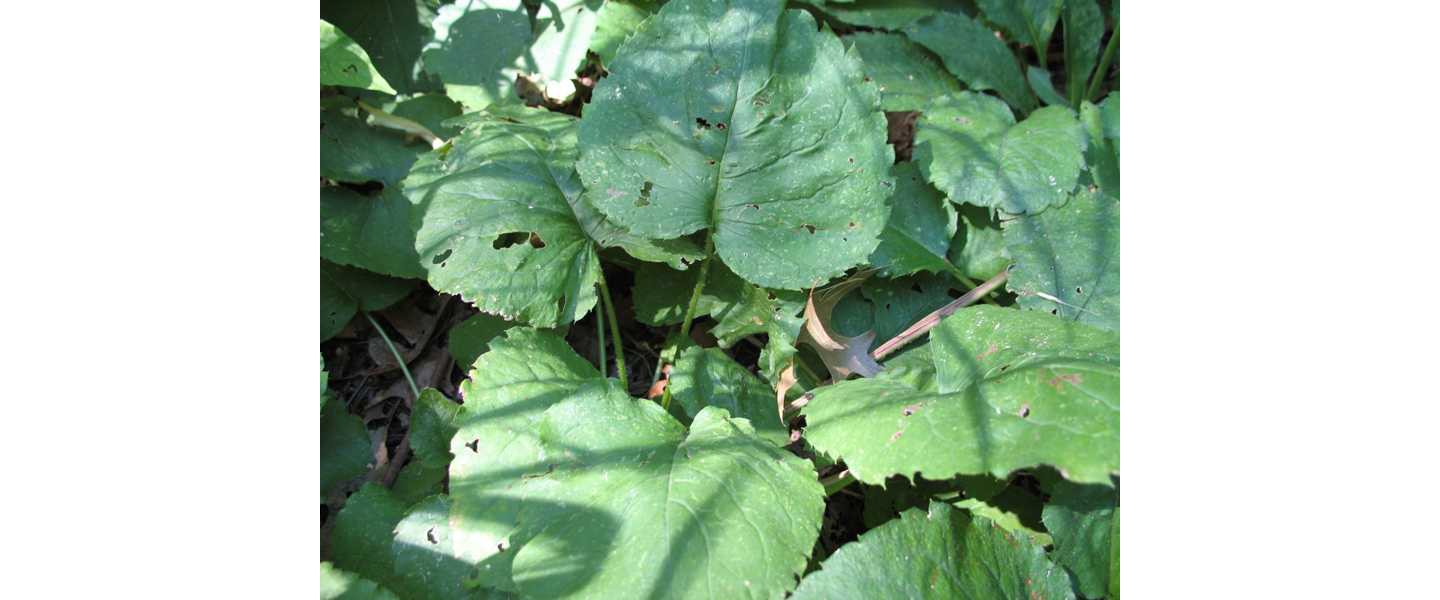
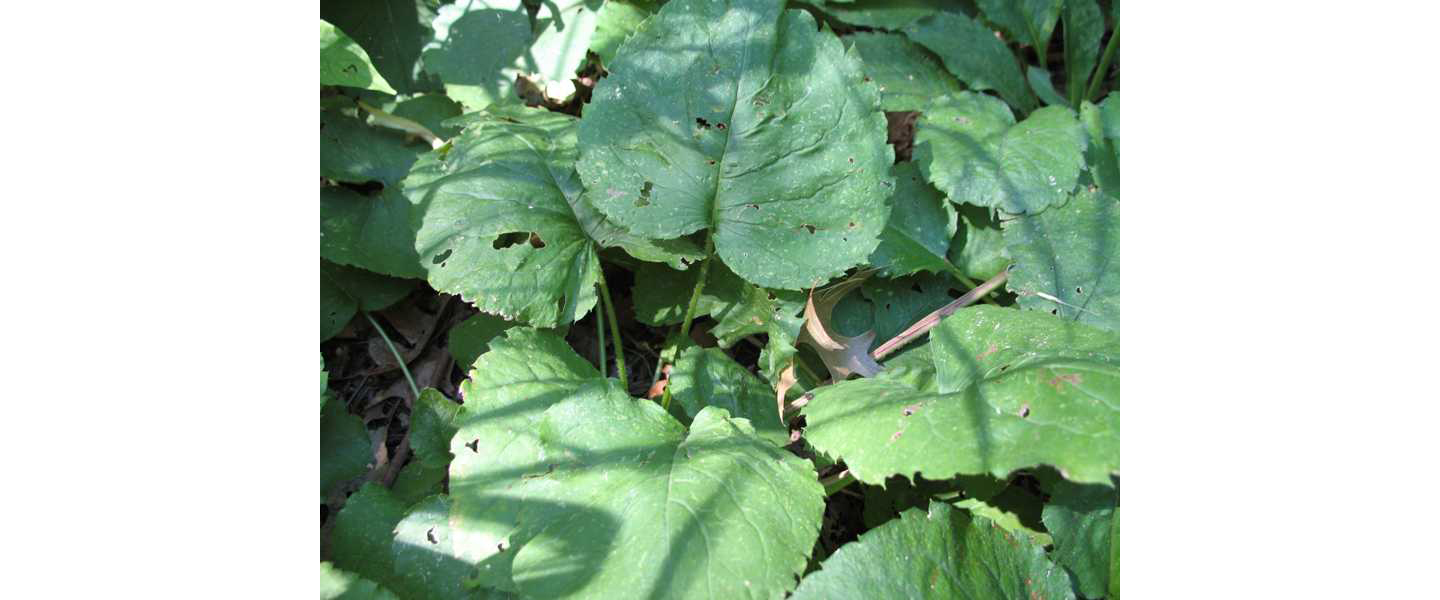
Big Leaf Aster
Growth Habit
HerbaceousPropagation
Seed Treatment and Storage: Moist cold stratify 30-60-90 days
Biocultural Value
The Algonquin and the Ojibwa prepared the young leaves as greens and put them in soups. The Haudenosaunee used the plant as a blood medicine and laxative.
Wildlife Value
Bigleaf aster is a larval host plant for the silvery checkerspot (Chlosyne nycteis), pearl crescent butterfly (Phyciodes tharos), and goldenrod hooded owlet (Cucullia asteroides). A specialist mining bee (Andrena hirticinta), relies on goldenrod and asters, including bigleaf aster, for pollen. Additional floral visitors include bumble bees (Bombus spp.), yellow-faced bees (Hylaeus spp.), sweat bees (Lasioglossum spp., Halictus spp.) and green sweat bees (Augochlorini tribe).
Location
Bald Hill and Caroline Pinnacles, Fall Creek Gorge, Polson Preserve, Ringwood Ponds, Mundy Wildflower GardenCultivation
Description
Tufted perennial herb to 1m tall; stems glandular-pubescent, twisted, flexuous, brittle. Leaves coarsely dentate, lower leaves to 14cm wide, petiolate, cordate, upper leaves ovate. Capitula in a corymb; phyllaries multiseriate, ovate to ovate-lanceolate; ray florets 9-20, pale violet, fading to white; disc florets yellow.
Source of plant
Bluestone Perennials

