

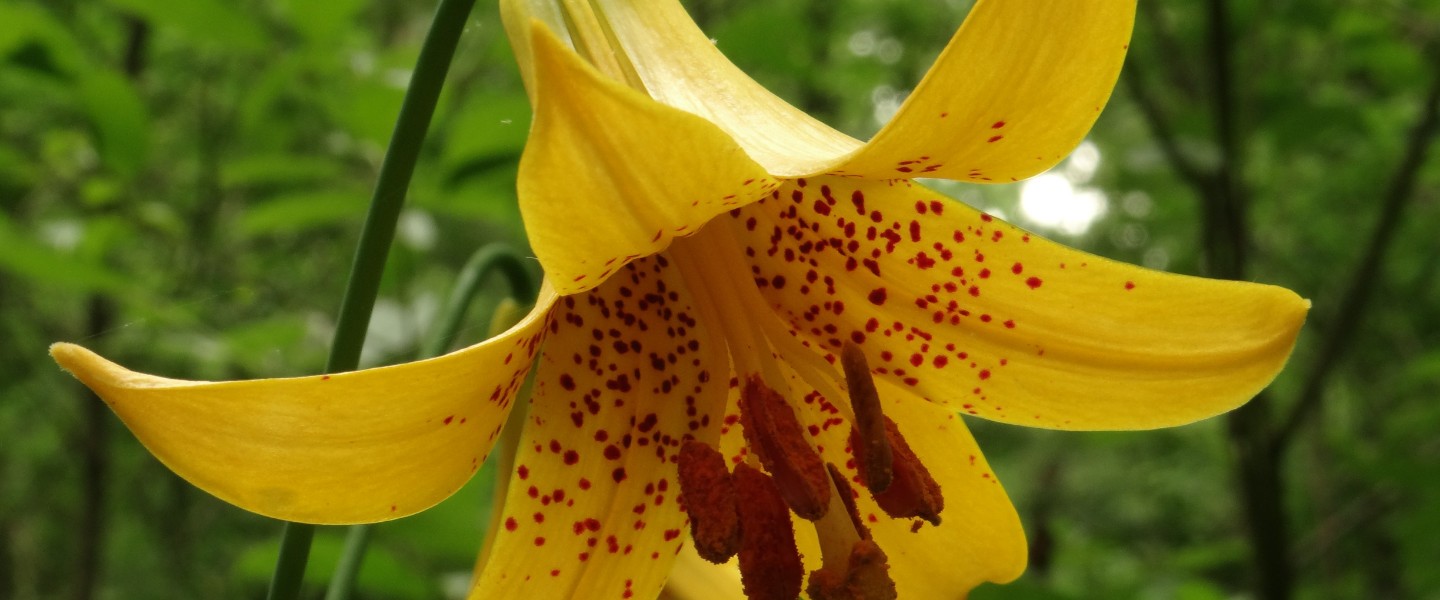
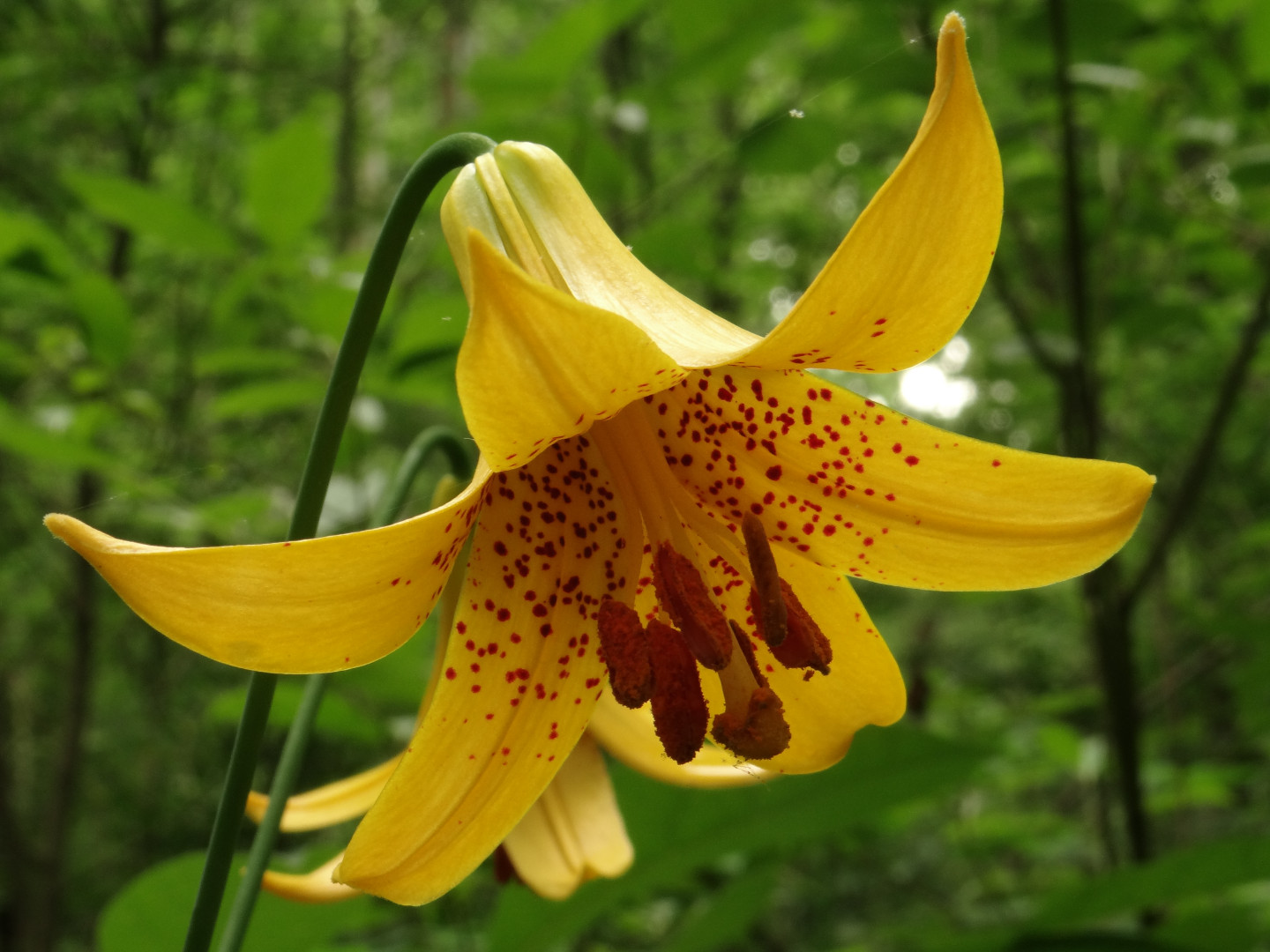
Canada Lily
Growth Habit
GeophytePropagation
Biocultural Value
Canada lily tubers, while edible, were considered a famine food by Native American groups such as the Cherokee and Huron. Medicinally, Canada lily was used as an antirheumatic (Cherokee), snake bite remedy (Chippewa), and treatment for ir menstruation (Micmac).
Wildlife Value
The large, nectariferous flower is primarily visited by ruby-throated hummingbirds (Archilochus colubris) and butterflies, in particular swallowtails and the great spangled fritillary (Speyeria cybele). The flowers also attract halictid bees (Lasioglossum spp.). Native lilies (Lilium spp.) are larval host plants for the burdock borer moth (Papaipema cataphracta), golden borer moth (Papaipema cerina), common borer moth (Papaipema nebris), and carrion flower moth (Acrolepiopsis incertella). Naricssus bulb fly (Merodon equestris) maggots feed on the corms, as do voles and chipmunks. Deer, rabbits, and other mammalian herbivores browse on the foliage. An introduced beetle, the lily leaf beetle (Lilioceris lilii) has been found feeding on Canada lily and may cause adverse impacts if it continues to spread.
Location
Mundy Wildflower GardenCultivation
Description
Stem slender, erect, 6-15dm, smooth; leaves mostly in 6-11 whorls of 4-12, the lowest regularly and a few of the uppermost occasionally alternate; leaf-blades lanceolate to linear-elliptic, widest at or below the middle, tapering to both ends, often spiculate-scabrous along the margins and veins beneath, the largest 8-15cmx8-20mm; flowers 1-5, nodding from long pedicels; tepals narrowly oblanceolate, acuminate, only slightly or moderately recurved, 5-8cm, yellow or orange-yellow, varying to sometimes nearly red, marked with purple spots within; filaments straight or nearly so, only the juxtaposed anthers evidently exserted; flower bud subterete. Moist or wet meadows. Quebec & ME to MD and in the mts. to VA, OH, KY, IN and AL. June-August.
Source of plant
Mount Cuba Center

