

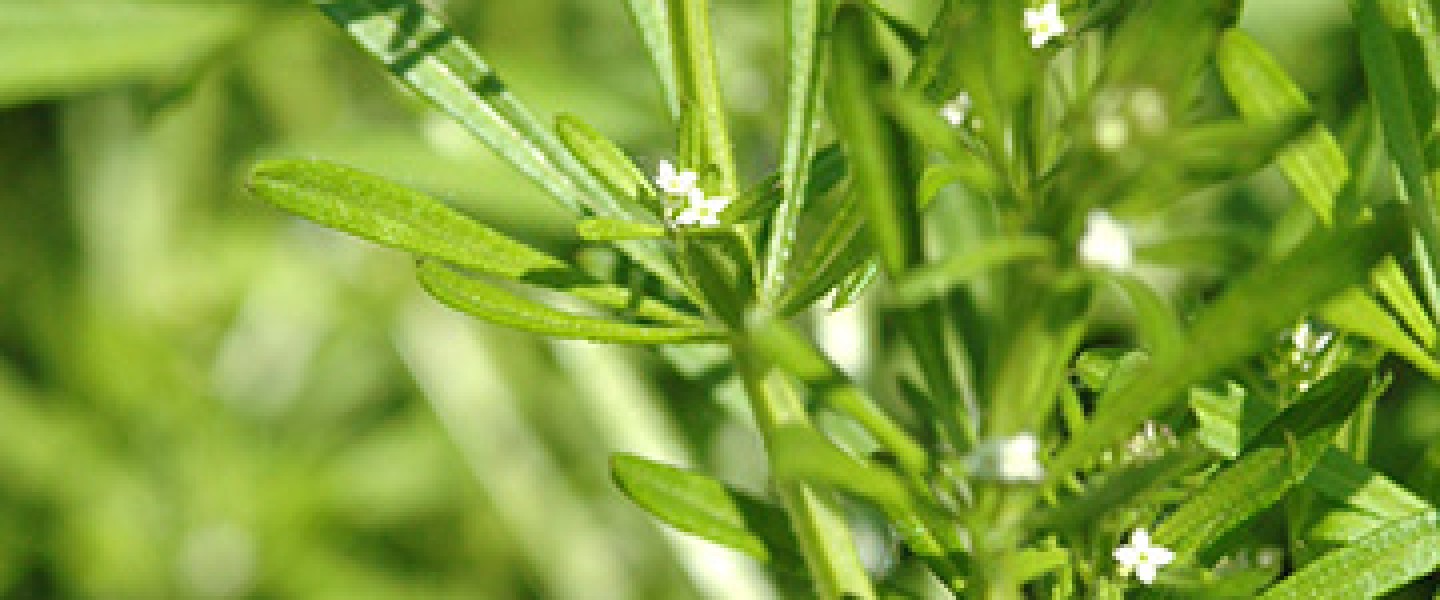
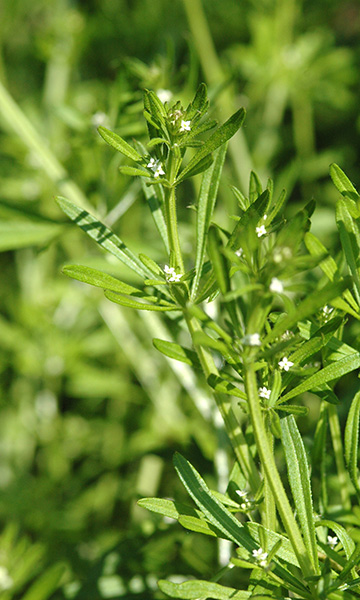
Cleavers
Biocultural Value
It has a long history of domestic medicinal use and is also used widely by modern herbalists. A valuable diuretic, it is often taken to treat skin problems such as seborrhea, eczema and psoriasis, and as a general detoxifying agent in serious illnesses such as cancer. The whole plant, excluding the root, is alterative, antiphlogistic, aperient, astringent, depurative, diaphoretic, diuretic, febrifuge, tonic and vulnerary. It has been shown of benefit in the treatment of glandular fever, ME, tonsillitis, hepatitis, cystitis etc. A tea made from the plant has traditionally been used internally and externally in the treatment of cancer. One report says that it is better to use a juice of the plant rather than a tea. Asperuloside can be converted into prostaglandins (hormone-like compounds that stimulate the uterus and affect blood vessels), making the genus of great interest to the pharmaceutical industry. The young leaves and stems are consumed as a vegetable or used in soups. The seeds can be used as a substitute for coffee.
Wildlife Value
Geese eat the vegetation. Beetles and flies visit the flowers.

