

Daphne
Daphne mezereum
Thymelaeaceae
Propagation
Seed Treatment and Storage: a non-native garden escapee; not recommended for propagation.
Biocultural Value
The Cherokee used daphne as a diaphoretic, stimulant, and treatment for venereal disease.
Poisonous
Daphne is among the plants longest-recognized as poisonous. All parts of the plant are highly toxic thanks to the presence of mezereinic acid anhydride, with the attractive drupes (berries) and bark most often implicated in poisoning. The leaves cause blisters when rubbed on the skin, while ingestion of plant parts produces a burning sensation and damage to the oral mucous membranes. Victims may also experience vomiting, diarrhea, stupor, weakness, and convulsions. Just a few berries can kill a child.
Poisonous
YesLocation
Mundy Wildflower GardenCultivation
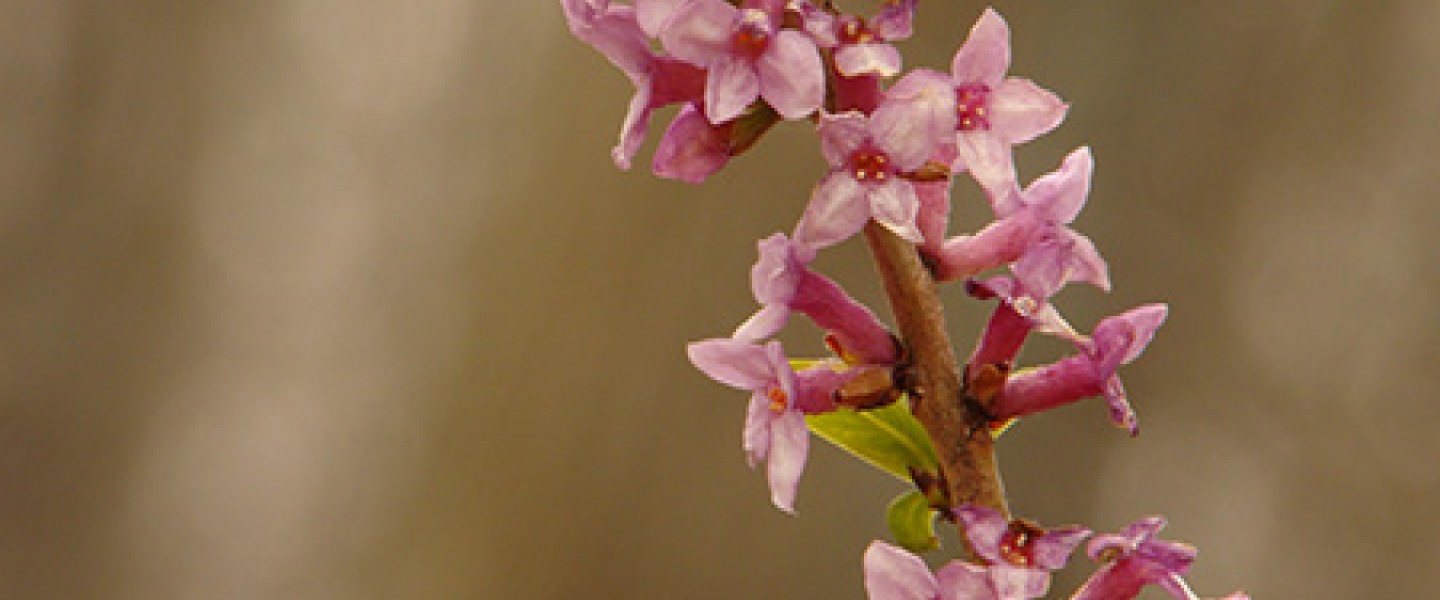
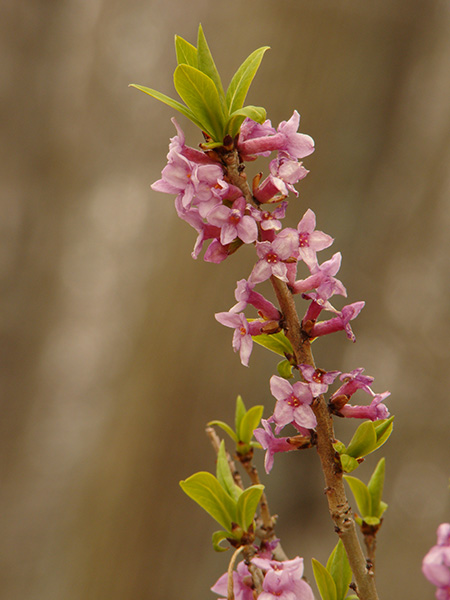
A 3-4' tall shrub with fragrant pinkish-purple flowers in early spring.
Light: sun to part shade
Moisture and Soil: moist, neutral or alkaline soil
Status
L3|SNR|GNR

