

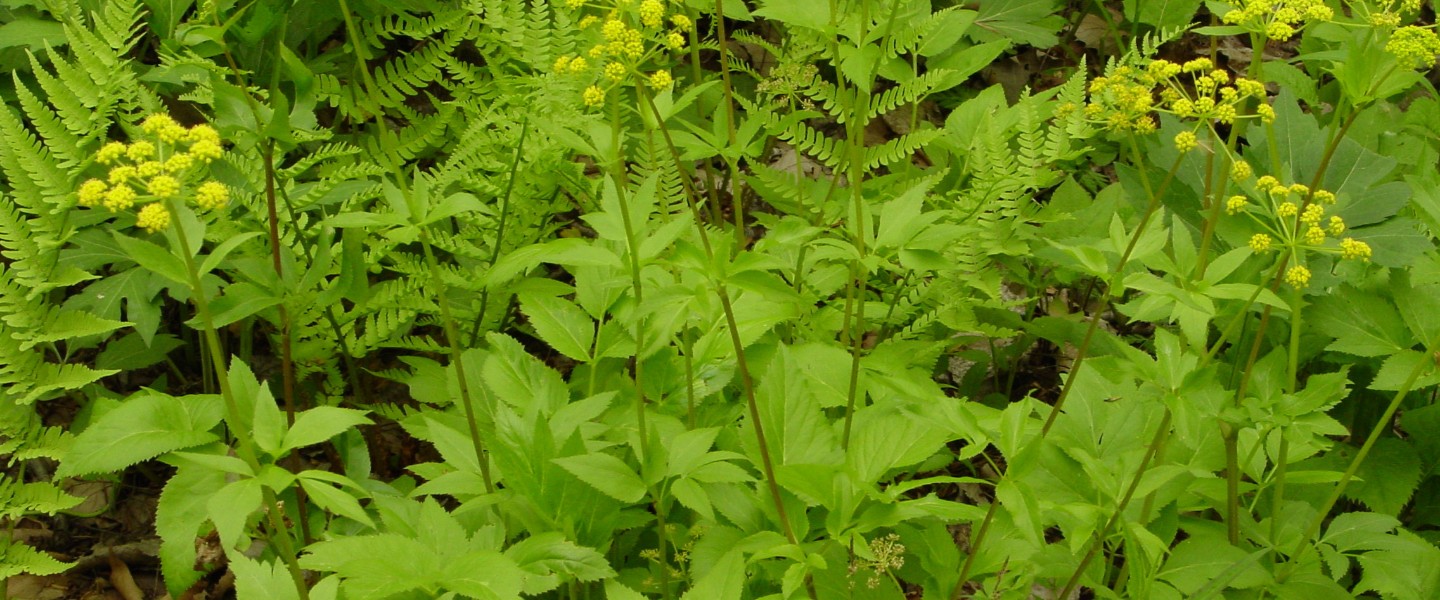
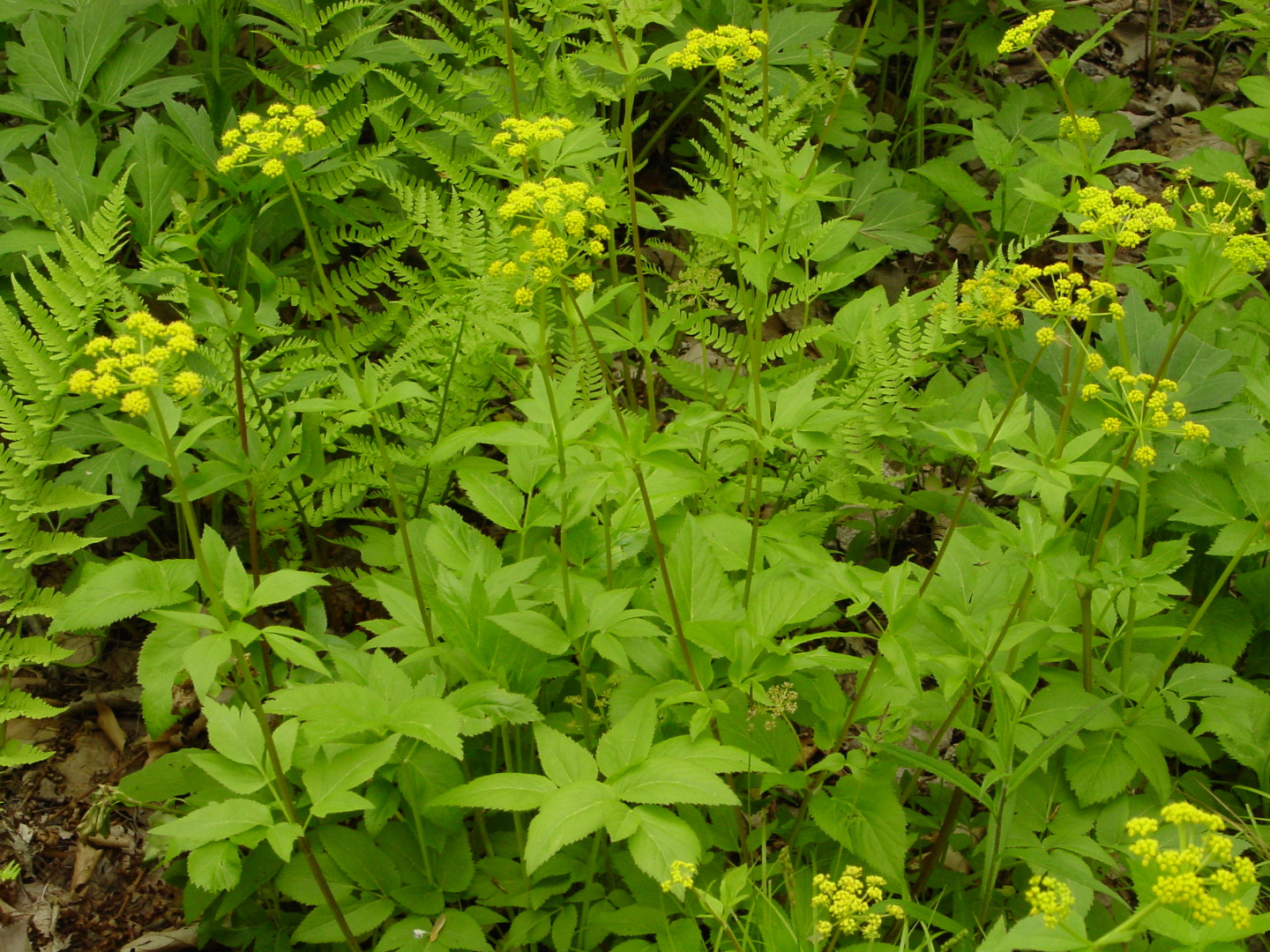
Golden Alexanders
Growth Habit
HerbaceousPropagation
Seed Treatment and Storage: 60/120 days cold/moist stratification. Spotty germination
Biocultural Value
The Meskwaki prescribed the roots as a fever remedy and included the powdered flower stalks in a compound for headaches.
Wildlife Value
Golden alexanders andrena (Andrena ziziae), a specialist mining bee, collects pollen only from Zizia. Other bees, azure butterflies (Celastrina spp.), ebony bugs (Corimelaena spp.), and soldier beetles (Rhagonycha spp.) feed on the nectar. Zizia is a larval host plant for black swallowtails (Papilio polyxenes), Ozark swallowtails (Papilio joanae), and the rigid sunflower borer (Papaipema rigida). Ladybird beetles (Cycloneda spp.) often lay their eggs under the flowerheads and near clusters of aphids (usually Aphis saniculae and A. thaspii), which provide food for both adults and larvae.

