

Indian Grass
Growth Habit
Grass/SedgeWildlife Value
Indian grass is the preferred host plant of the velvet striped grasshopper (Eritettix simplex), little pasture grasshopper (Melanoplus confusus), and handsome grasshopper (Syrbula admirabilis), which in turn are an important food source for a variety if songbirds and gamebirds. Several other insects feed on the foliage, including a leafhopper (Flexamia reflexa), Issid planthopper (Bruchomorpha extensa), and the caterpillars of the pepper-and-salt skipper (Amblyscirtes hegon). The tall, erect foliage provides valuable nesting habitat and cover for birds.
Location
Fall Creek Gorge, Mundy Wildflower GardenCultivation
Description
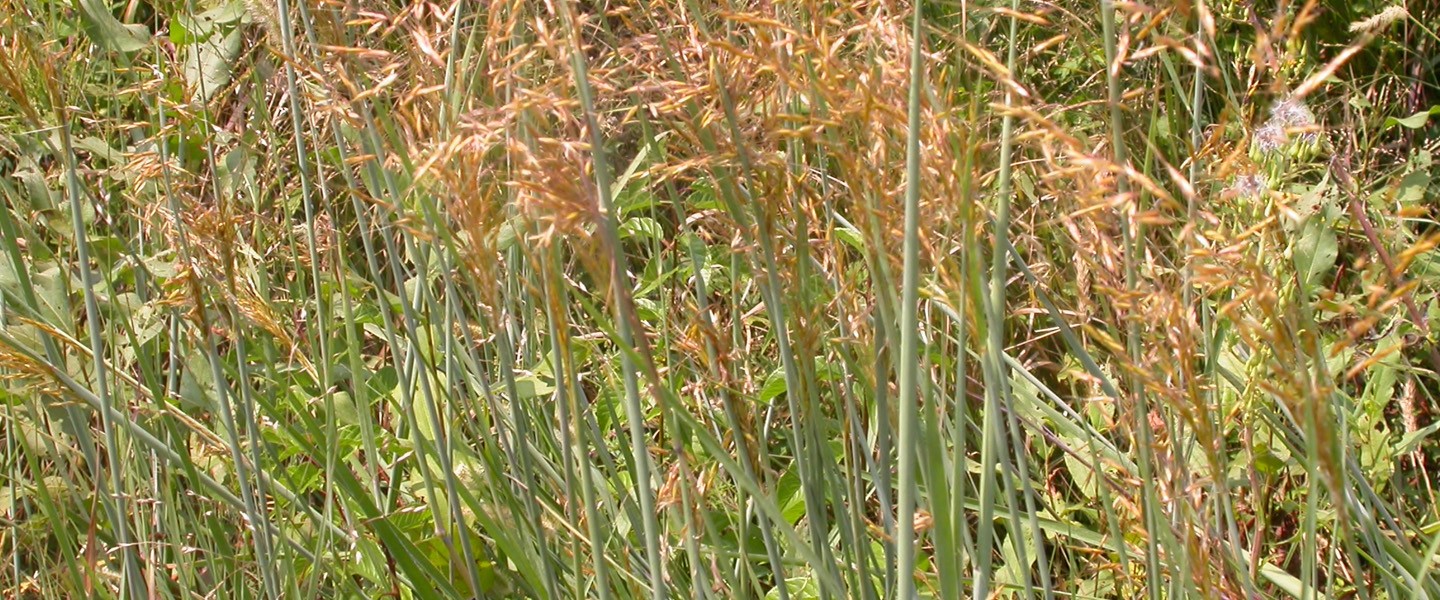
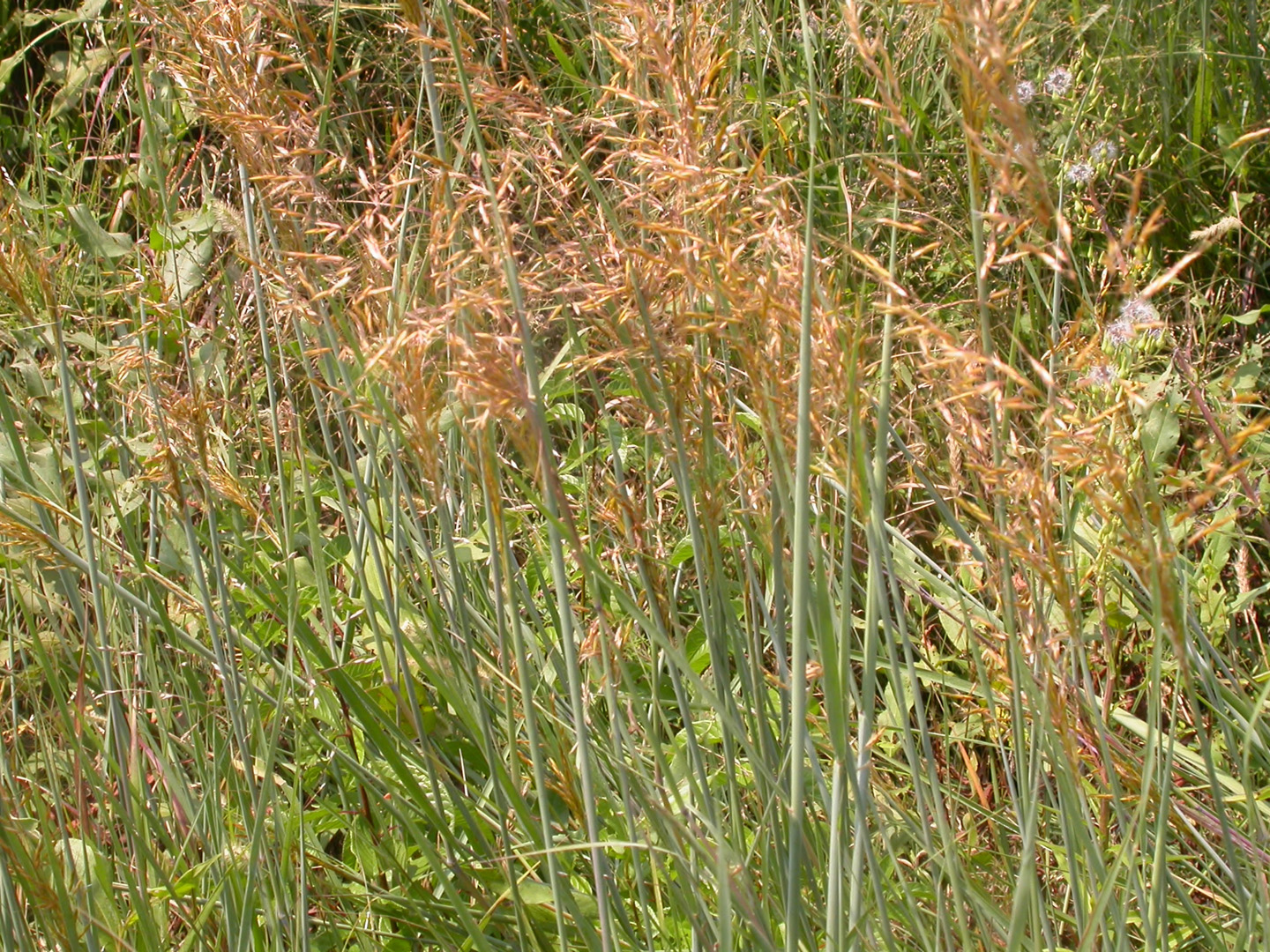
Coarse perennial to 2m. Stems clumped. Leaves linear to 60x1cm, scabrous, attenuate; sheaths glabrous, auricles erect; ligules membranous. Panicle terminal, narrow, compact, to 35cm, tinged yellow to brown; spikelets sessile, lanceolate, to 0.8cm, hirsute, awn to 1.5cm; lemmas hyaline; spikelet golden brown; anthers yellow. Frequently used in restoration seeding or plantings.
Source of plant
North Creek Nurseries

