

Jack-In-The-Pulpit
Growth Habit
HerbaceousPropagation
Biocultural Value
The acridity of Jack-in-the-pulpit roots is not readily dispelled by boiling, but dry heat or prolonged exposure to air will ultimately break up the calcium oxalate crystals. The dried roots can then be ground and processed into a palatable flour, which is said to have a mild cocoa flavor. The Potawatomi ate the thinly sliced roots after cooking them in a pit oven for three days. The Pawnee made rattles by putting Jack-in-the-pulpit seeds in a gourd shell. Many Native American groups recognized the plant's poisonous properties, with the Meskwaki reportedly even using it as an intentional poison during war. The plant was also prepared medicinally throughout its range. The Haudenosaunee, for example, employed Jack-in-the-pulpit as an analgesic, antidiarrheal, dermatological aid, febrifuge, orthopedic aid, stimulant, and eye medicine. Haudenosaunee women also took an infusion of Arisaema triphyllum var. triphyllum rhizomes for temporary sterility.
Jack-in-the-pulpit produces needle-like crystals of calcium oxalate which become embedded in mucus membranes if ingested and cause intense pain and a burning sensation. Calcium oxalate is particularly abundant in the rhizome. Those who eat it rarely go beyond the first taste.
Wildlife Value
Jack-in-the-pulpit flowers are pollinated by fungus gnats (Sciaridae and Mycetophilidae) and the larvae of parasitic thrips (in particular the specialist species Heterothrips arisaemae). Ring-necked pheasants, wild turkey, and wood thrush eat small amounts of the bright red fruit.
Poisonous
YesLocation
Fall Creek Gorge, Fischer Old-growth Forest, McDaniel Meadow, Woods, and Swamp, Polson Preserve, Ringwood Ponds, Steep Hollow Creek, Tarr-Young Preserve, Mundy Wildflower GardenCultivation
Description
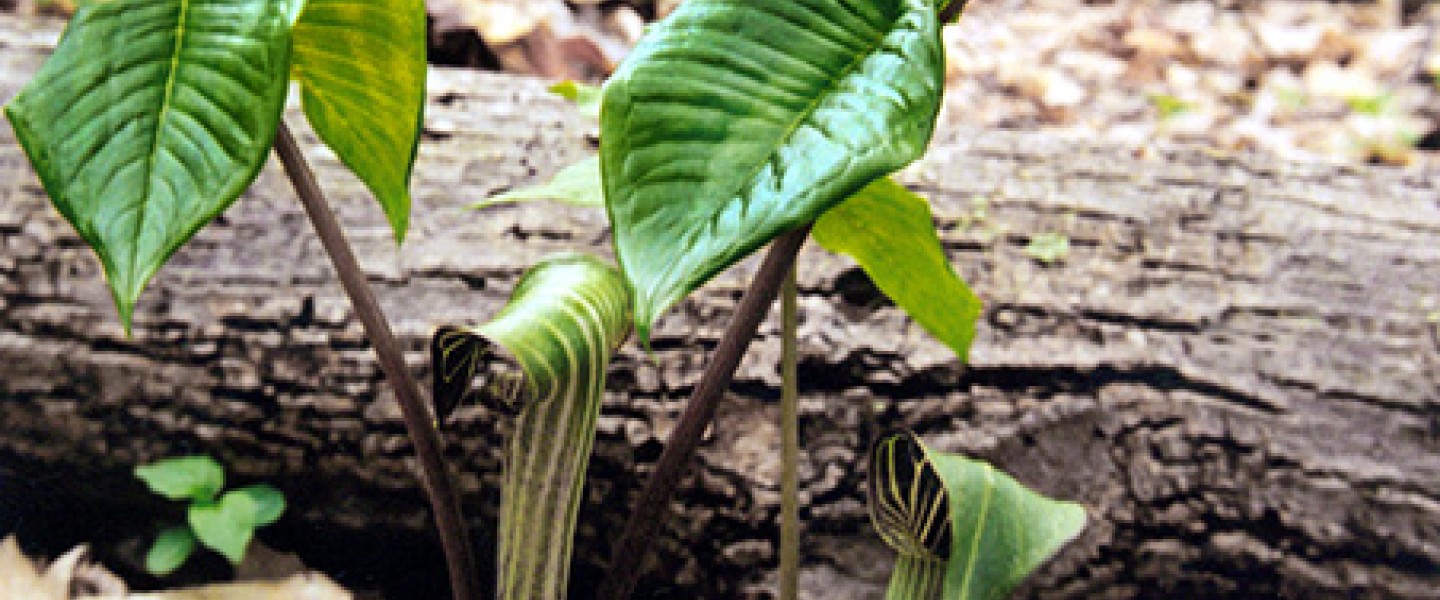
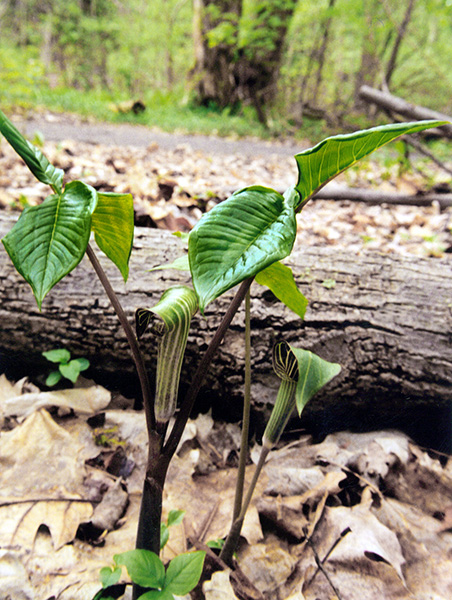
To 60cm. Leaves 2 (occasionally 1 or 3), leaflets 8-15—3-7cm, 3, ovate to oblong-ovate, acute; petiole sometimes spotted purple, usually exceeding peduncle. Spathe to 15cm, green to purple, striped green or white, margins of tube reflexed, limb acute-acuminate, incurved; spadix appendix to 7cm, stipitate, erect, exserted from tube, clavate to cylindric, green to purple, or purple-flecked.
Source of plant
Lazy S's Farm Nursery

