

Jacob's Ladder
Growth Habit
HerbaceousPropagation
Seed Treatment and Storage: cool/moist stratify
Biocultural Value
The Meskwaki used a decoction containing Jacob's ladder root as a powerful cathartic and diuretic.
Wildlife Value
Pollen is transferred onto the heads and thoraxes of both small and large bees when they visit to feed on the flowers’ nectar, although large bees are more effective pollinators because they are more likely to come in contact with the pollen-laden anthers. Though this flower is often visited by syrphid flies (Toxomerus spp.) and fire-colored beetles (Pedilus lugubris), these species are ineffective pollinators because they eat rather than transfer pollen and often visit flowers of a completely different species afterwards.
Location
Mundy Wildflower GardenCultivation
Description
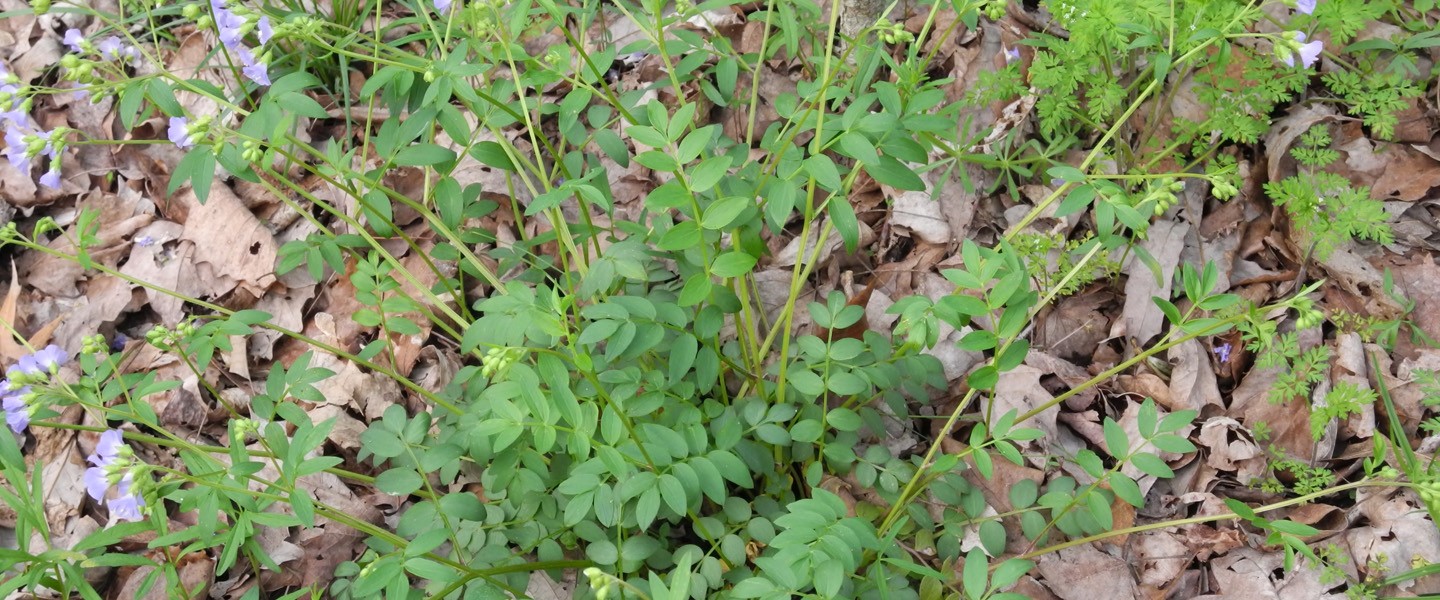
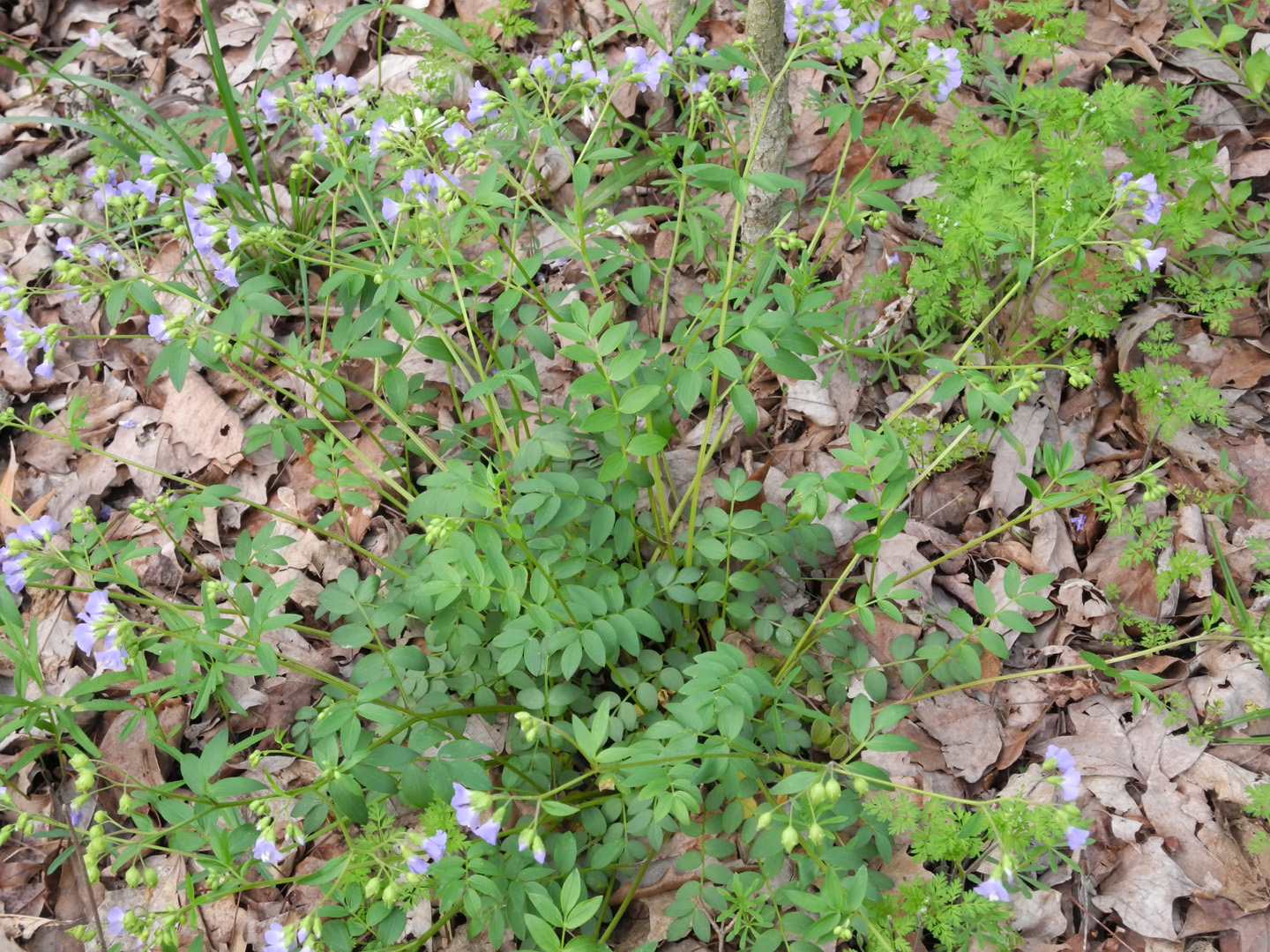
The attractive, pinnately compound leaves and the loose flower clusters of this perennial arise on separate stalks. The stalks are slender and somewhat weak, rising 10-15 in. A smooth, weak-stemmed plant with light blue to purple, bell-shaped flowers in loose clusters. The large, bell-shaped flowers are blue or pink in color.
Source of plant
Unknown

