

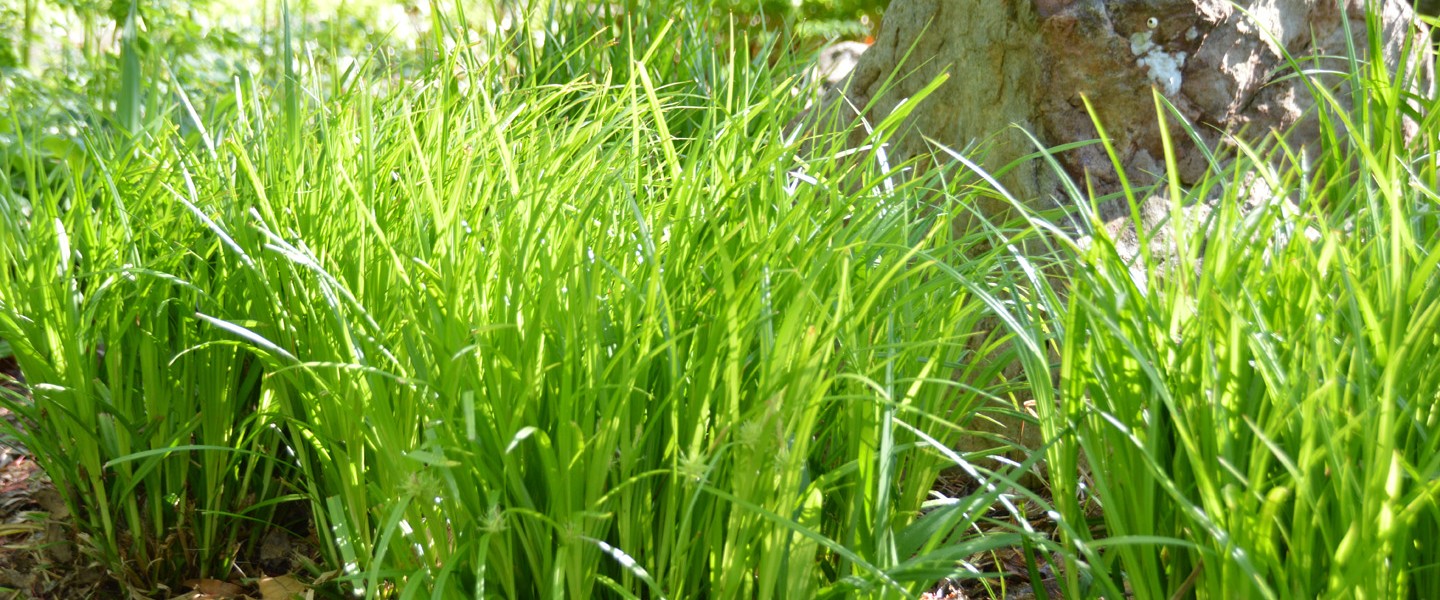
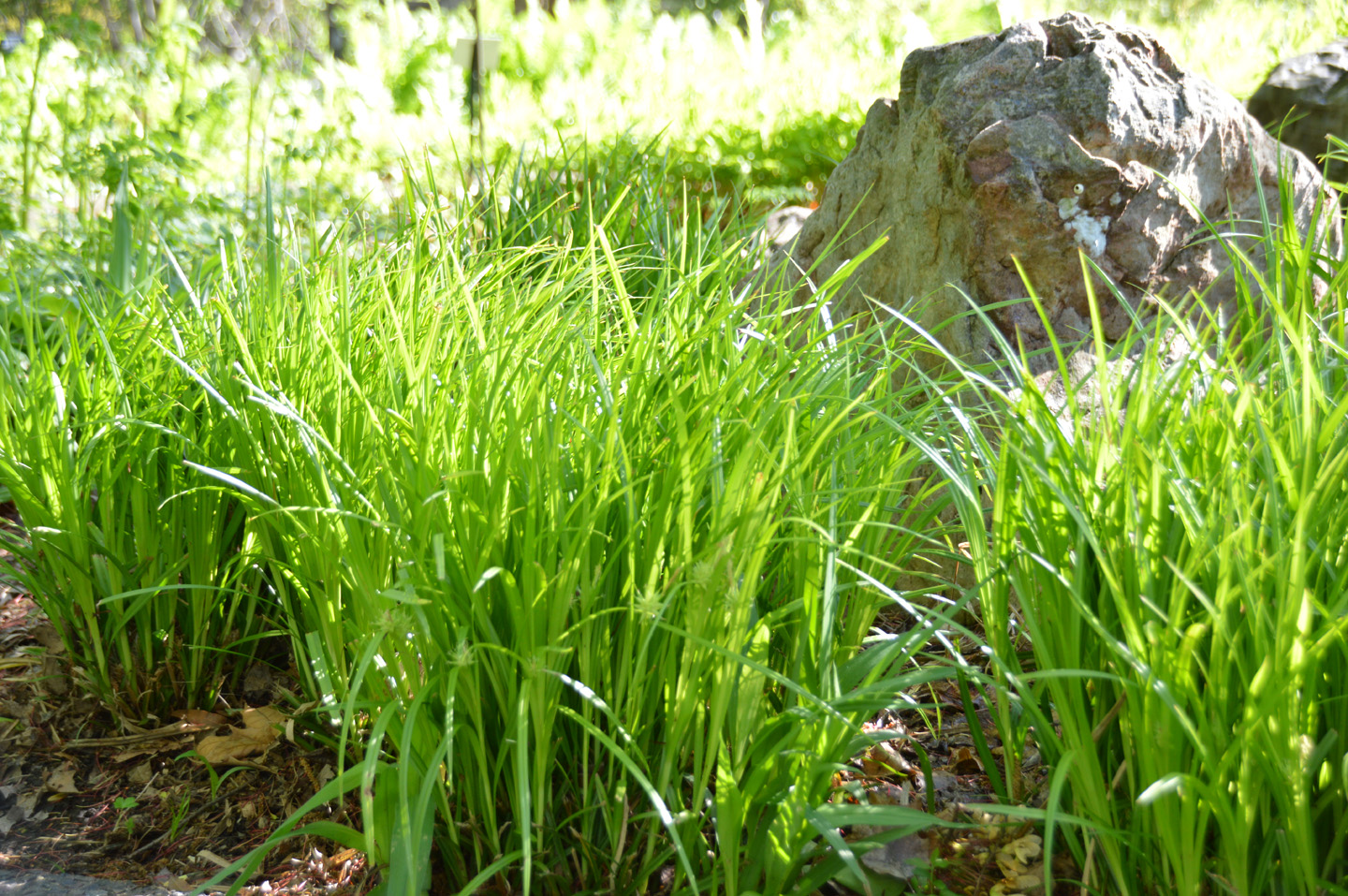
Mace Sedge
Growth Habit
Grass/SedgePropagation
Seed Treatment and Storage: Moist cold stratify 30-60-90 days. Reluctant to germinate. May take several months or another whole year.
Wildlife Value
Several insects feed on Asa Gray's sedge, including the caterpillars of the eyed brown butterfly (Satyrodes eurydice) and Appalachian brown butterfly (S. appalachia), leaf-mining larvae of two moths (Elachista argentosa and E. madarella), larvae of the ignorant apamea moth (Apamea indocilis), and an aphid (Carolinaia caricis). Sedge seeds are eaten by a variety of wildlife, including ducks, rails, grouse, swamp sparrows, tree sparrows, Lincoln sparrows, snow buntings, larkspurs, and redpoll. Along with insects, sedge seeds make up a significant portion of the diet of ruffed grouse chicks. Muskrats occasionally feed on the rhizomes, culms, and young shoots, and white tailed deer sparingly consume the foliage. Carex grayi also offers valuable cover for many small animals and habitat for ground-nesting birds.
Location
Mundy Wildflower GardenCultivation
Description
Clump forming, 30-100cm. Leaves broad, flat, 6-11mm wide, pale green, margin rough. Bracts leaflike, exceeding inflorescence; male spike terminal, thin, female spikes 1-2, 12-30 flowered, round; utricle inflated, firm, glabrous, 15-20mm in fruit, spreading from a single point, short-beaked.
Source of plant
Jelitto Seeds

