

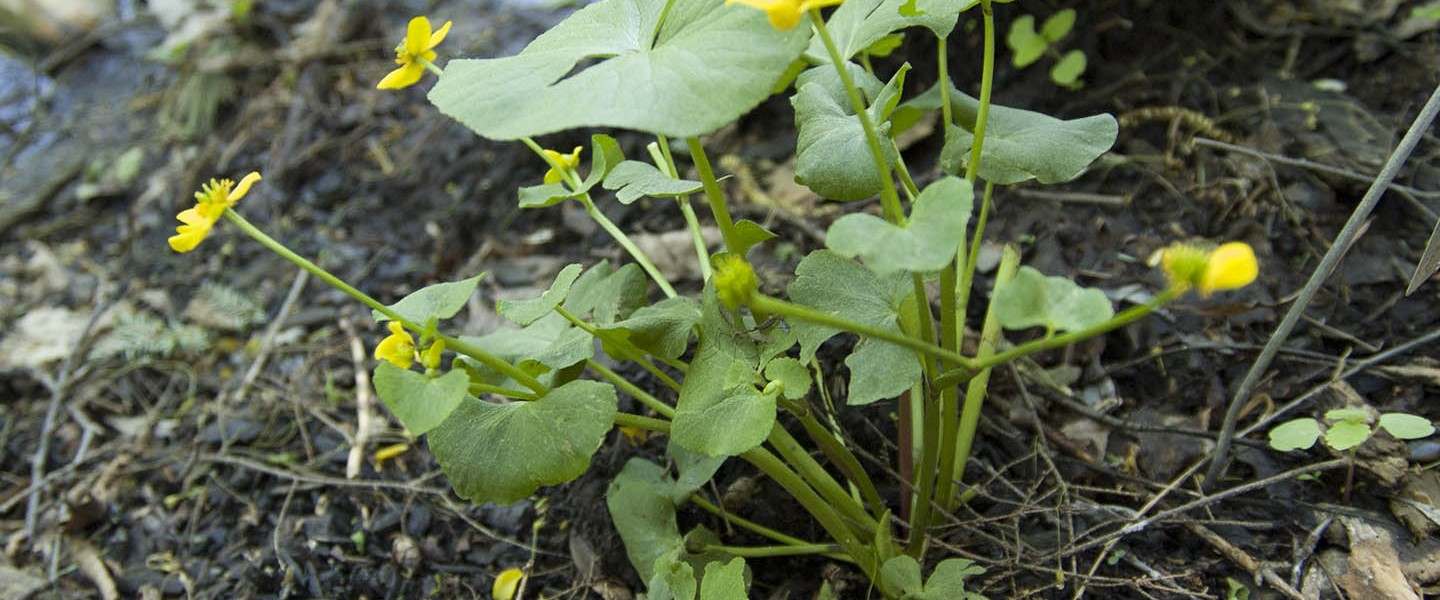

Marsh Marigold
Growth Habit
HerbaceousPropagation
Seed Treatment and Storage: seed germinates best if cold/moist stratified for 60-90 days
Biocultural Value
The young leaves and stems of marsh marigold are edible after thorough boiling and at least one change of water. Pickled, the young flower buds are said to make a good substitute for capers. Marsh marigold was used by the Abnaki, Chippewa, Haudenosaunee, Menominee, and others as both a poison and a food. The Haudenosaunee used the Marsh Marigold to induce vomiting and as a defense against love charms.
Poisonous
Marsh marigold leaves are poisonous to livestock and humans due to the presence of protoanemonin, an oily toxin found in all plants of the Ranunculaceae family. Protoanemonin is released by damaged plants and can cause skin irritation. If ingested, it can induce convulsions and lesions throughout the digestive tract. Young plants are less poisonous than mature ones.
Wildlife Value
Marsh marigolds are primarily pollinated by pollen-seeking syrphid flies (Neoascia spp., Xylota spp., and Lejops spp.), although the flowers are also visited by a number of small- and -sized bees. Ants (family Formicidae) and cuckoo bees (Nomada spp.) collect marsh marigold nectar. Mammalian herbivores avoid the acrid leaves.
Poisonous
YesLocation
Fall Creek Gorge, McDaniel Meadow, Woods, and Swamp, Purvis Road Wetlands Natural Area, Ringwood Ponds, Mundy Wildflower GardenCultivation
An 8-12" plant with yellow flowers.
Light: sun to part shade
Moisture and Soil: moist to wet soil
Description
Graceful mound of shining rounded leaves is topped with brownish branching stems covered with single flowers filled with rich yellow stamens. Plants 18" tall.
Source of plant
Shady Oaks Nursery, Bluebird Nursery Inc., William Tricker Inc., Panfield Nurseries Inc.

