

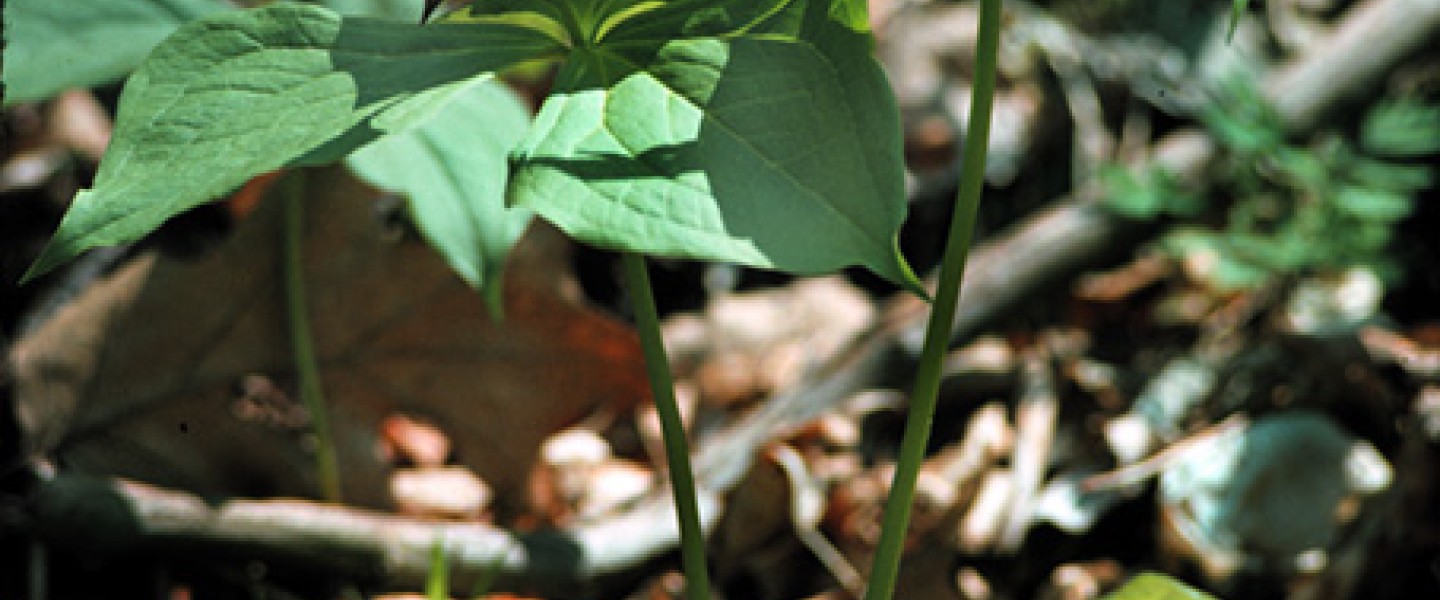

Red Trillium
Growth Habit
HerbaceousPropagation
Seed Treatment and Storage: Keep seeds moist. Needs warm+moist/cold+moist stratification. It may be 2-3 years until growth appears above ground (first year post germination is underground development); 5-8 years to flower.
Biocultural Value
Although it has been recorded that young, unfolding trillium plants can be eaten, these scarce and precious wildflowers should not be gathered for food purposes except in cases of emergency. Trillium roots are highly emetic. The Cherokee used wake robin for everything from bowel complaints and profuse menstruation to asthma and coughs. The Abnaki prescribed ground rhizomes for a variety of pediatric maladies, and the Haudenosaunee combined the underground parts with other plants in a remedy for pimples and sunburn.
Wildlife Value
Because wake robin flowers have the color and appearance of rotting meat, they probably attract flesh flies, carrion beetles, and similar insects. Trillium seeds are dispersed by ants, who take the fruit to their underground homes, eat the flesh (elaisome) and discard the seed. The foliage is vulnerable to browsing by white-tailed deer.
Location
Fall Creek Gorge, McDaniel Meadow, Woods, and Swamp, Purvis Road Wetlands Natural Area, Ringwood Ponds, Tarr-Young Preserve, Mundy Wildflower GardenCultivation
Description
Highly variable; stems 15-60 cm tall including the 10-cm-long peduncle. Leaves broadly rhombic-ovate to 17.5-cm-long, sessile. Flowers nearly erect, peduncled, brownish-purple to purple, rarely white, yellow, or green, to 5 cm long, the petals flared outwards from the base, the anthers purple-red like the stigmas but with white pollen.
Source of plant
Longfield Gardens, Roslyn Nursery

