

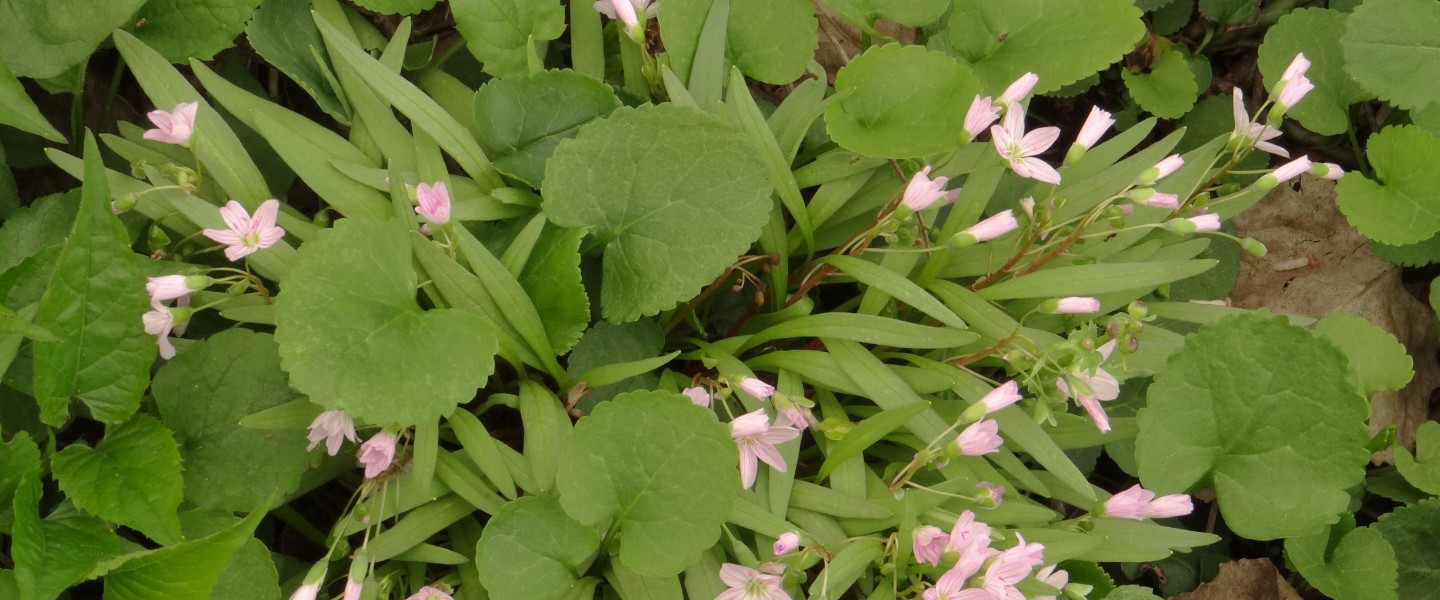

Spring Beauty
Claytonia virginica
Montiaceae
Growth Habit
HerbaceousPropagation
Seed Treatment and Storage: store moist and give warm-cold-warm stratification
Biocultural Value
The Haudenosaunee and Algonquin used spring beauty corms and foliage as a food source. The Haudenosaunee also employed the powdered corms as a remedy for children suffering from convulsions.
Wildlife Value
Spring beauty's bright pink pollen is an important source of nourishment for bees, particularly the specialist Spring Beauty Bee (Andrena erigeniae), in early spring. Spring beauty corms are dug and eaten by small rodents, including the white-footed mouse and eastern chipmunk. The foliage is browsed sparingly by white-tailed deer.
Location
Mundy Wildflower GardenCultivation
A 6" tall ephemeral with pink and white flowers that will spread.
- Light: part shade to part sun
- Moisture and Soil: adaptable, but wants rich soil
Special characteristics
Spring beauty's bright pink pollen is an important source of nourishment for bees in early spring.Climate Change Sensitivity
Over the period from 1986 to 2015, Claytonia virginica bloomed an average of 0.5 days earlier.Status
L4|S5|G5

