

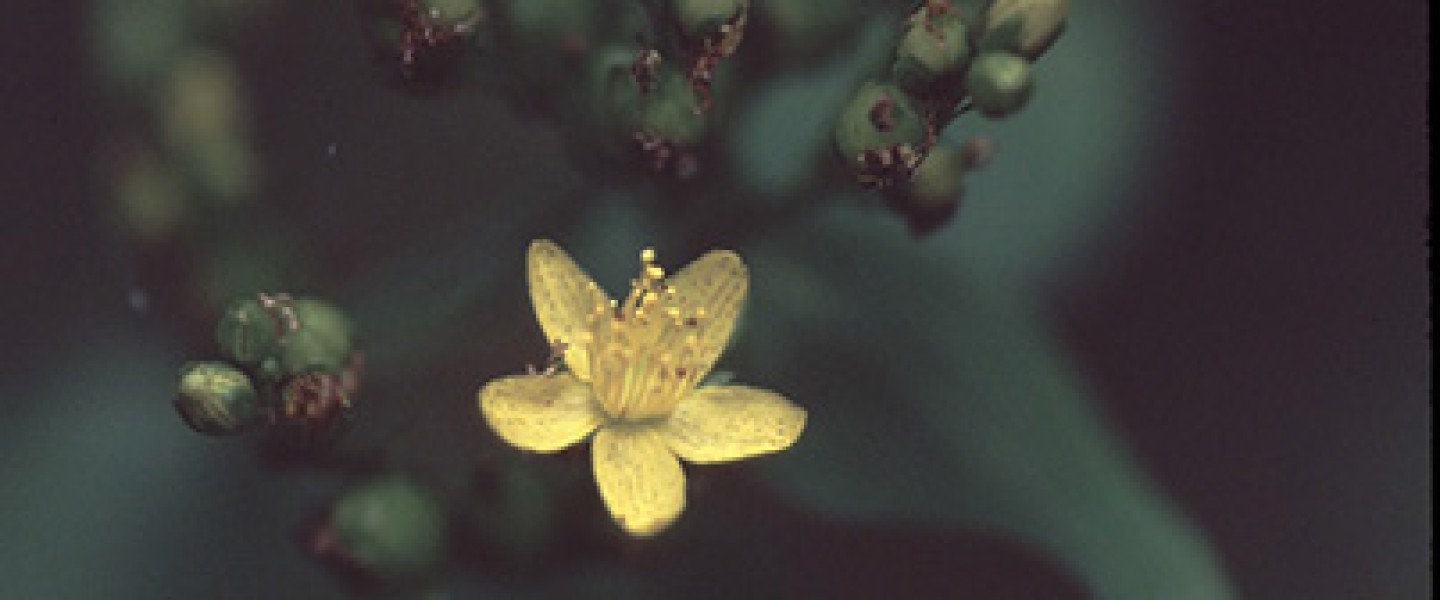
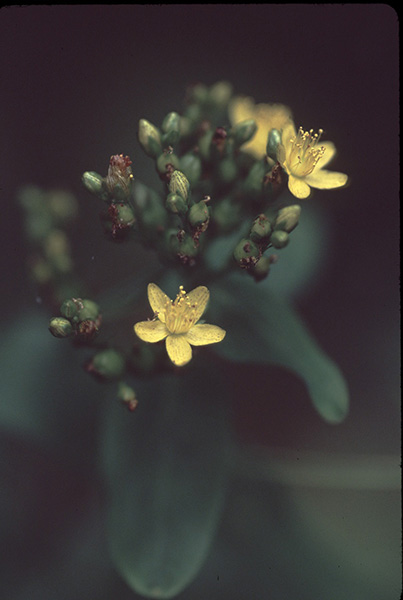
Swamp St John's Wort
Propagation
cold/moist stratify
Biocultural Value
The flowers are often used in tea as they are a well-known herbal treatment for mild forms of depression, wounds, cuts, and sores.
Wildlife Value
The clusters of yellow flowers are primarily bee pollinated. The foliage is mildly toxic to mammalian herbivores, so it is a great deer-resistant option. Leaf sap can also cause skin irritation when exposed to sunlight. Beetles and Syrphid flies may also visit the flowers, but they are less effective pollinators. The reward of these insects is the abundant pollen, as the flowers produce no nectar. The caterpillars of the butterfly Strymon melinus (Gray Hairstreak) reportedly eat the seed capsules, while the caterpillars of the moth Nedra ramosula (Gray Half-Spot) feed on the foliage.
Poisonous
YesLocation
Fall Creek Gorge, Mundy Wildflower GardenCultivation
sun-pt sun; moist -regular well-drained soil

