

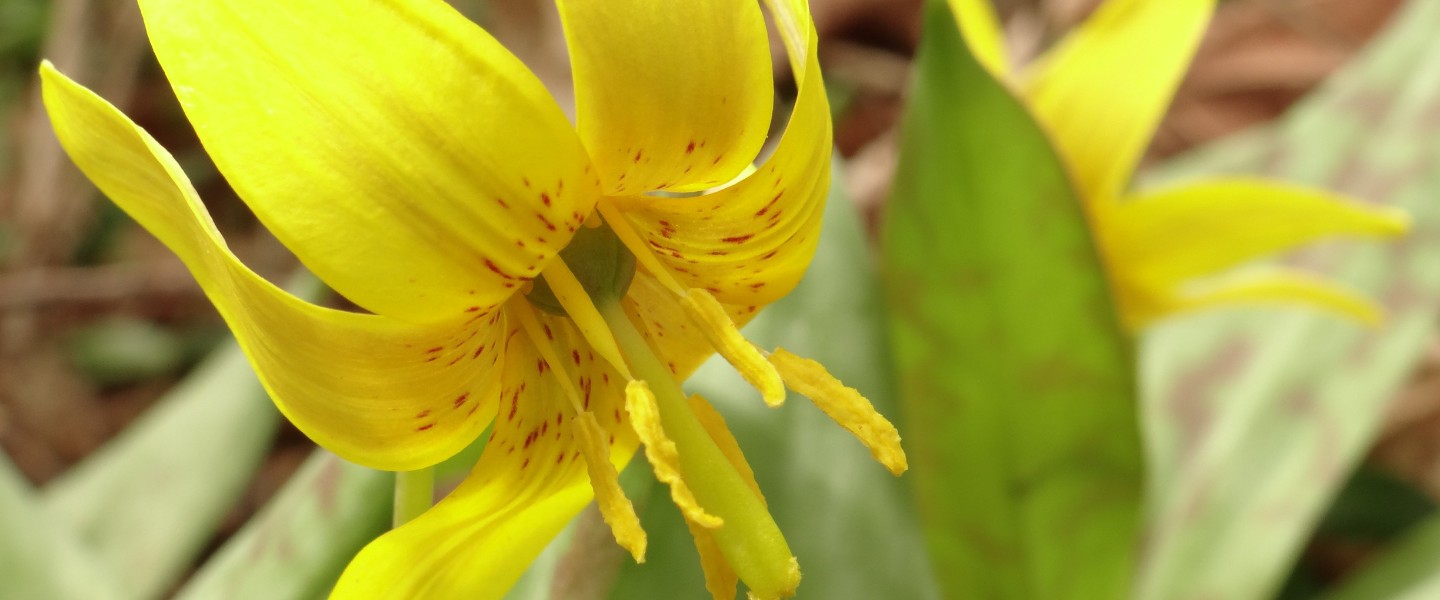
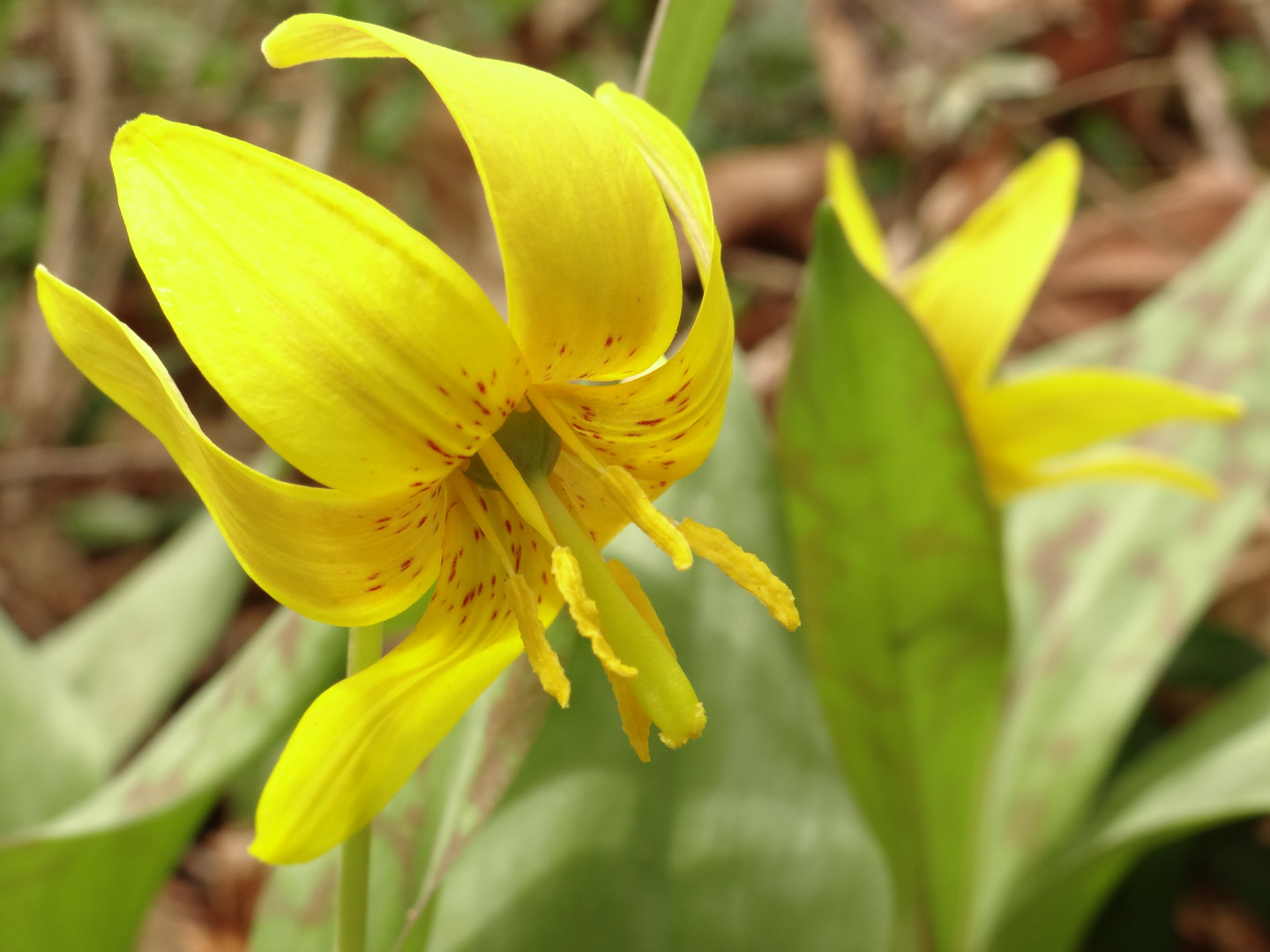
Trout Lily
Erythronium americanum
Liliaceae
Growth Habit
HerbaceousPropagation
Seed Treatment and Storage: keep seed moist; warm/cold/warm stratify, may take 2-3 years to germinate
Biocultural Value
Trout lily leaves can be used as a potherb, although the greens should not be gathered except where very abundant. The bulbs are sweet and nutritious but small and difficult to dig. Trout lily was used by the Cherokee and Haudenosaunee peoples for a variety of medicinal uses, including to reduce fever, heal wounds, and even prevent pregnancy.
Wildlife Value
The trout lily andrena (Andrena erythronii), a specialist bee, collects pollen only from flowers in the genus Erythronium. The seeds are distributed in part by ants. The foliage is eaten only sparingly by herbivores, possibly because its dappling serves as camouflage against the forest floor.
Location
Fall Creek Gorge, McDaniel Meadow, Woods, and Swamp, Purvis Road Wetlands Natural Area, Ringwood Ponds, Mundy Wildflower GardenCultivation
Mottled leaves and yellow flowers up to 10" tall
Light: shade to part shade
Moisture and Soil: medium to moist, rich soil
Special characteristics
This plant's speckled leaves remind some people of a trout’s markings, hence the common name.Climate Change Sensitivity
Over the period from 1986 to 2015, Erythronium americanum bloomed an average of 10.9 days earlier.Status
L4|S5|G5

