

Yellow Birch
Growth Habit
TreeBiocultural Value
The Haudenosaunee used a decoction of yellow birch as a skin wash, blood purifier, and lactation aid. Several Native American groups used the bark to make dishes, storage containers, buckets, winnowing trays, and dwellings. The wood is used for lumber. Like maple sap, yellow birch sap can be boiled into syrup, but its low sugar content means that it is typically drunk without boiling or historically used only when the former not not available in sufficient quantities.
Wildlife Value
Yellow birch's drab, wind-pollinated flowers do not attract pollinators, but the tree has considerable wildlife value. A variety of insects feed on yellow birch foliage, bore through its wood, or feed on its seeds. The tree hosts caterpillars of the compton totoiseshell butterfly (Nymphalis l-album), birch dagger moth (Acronicta betulae), chocoloate prominent moth (Peridea ferruginea), and the brown-shaded carpet moth (Venusia comptaria), among others. Additional insect feeders include aphids such as the common birch aphid (Calaphis betulaecolens), the birch lace bug (Corythucha pallipes), the birch catkin bug (Kleidocerys resedae), birch sawfly (Arge pectoralis) and fringed birch sawfly (Dimorphopterix melaognathus) larvae, and birch seed midge (Oligotrophus betheli) larvae. The yellow bellied sapsucker (Sphyrapicus varius) drills holes in yellow birch bark and feeds on the sap. A wide variety of birds eat the seeds, catkins, and buds. Squirrels collect the seeds, white-talied deer browse the young foliage, and beaver gnaw the wood. The trees provide roosting sites for birds and several species of bat.
Location
Edwards Lake Cliffs Preserve, Fall Creek Gorge, Fischer Old-growth Forest, McDaniel Meadow, Woods, and Swamp, Purvis Road Wetlands Natural Area, Ringwood Ponds, Steep Hollow Creek, Tarr-Young Preserve, Mundy Wildflower GardenCultivation
Description
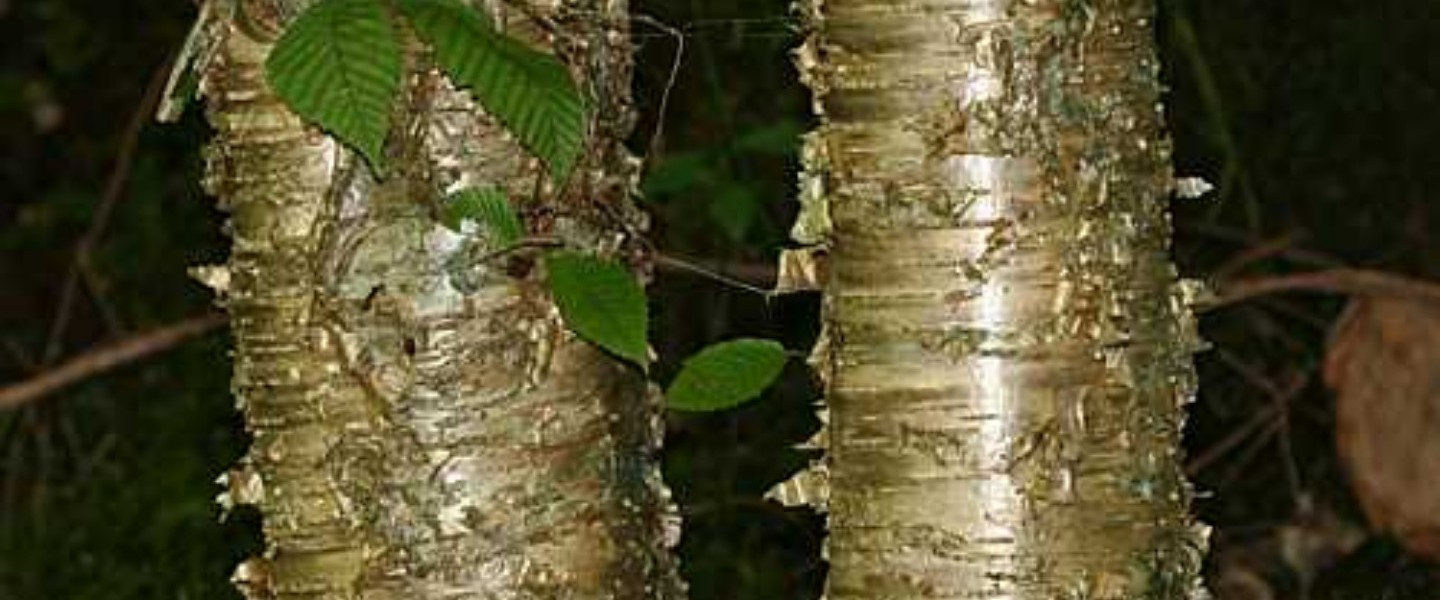
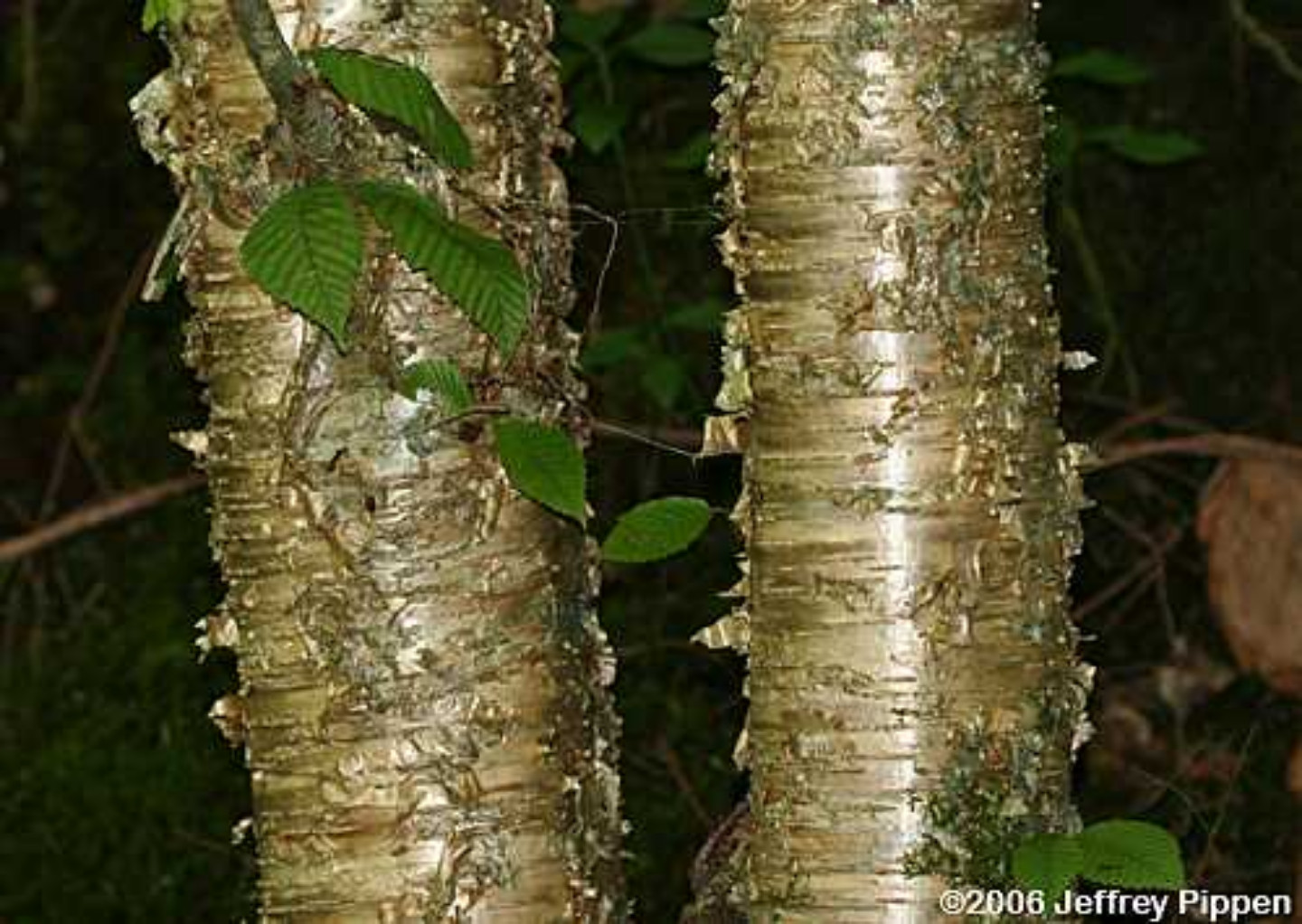
Plants 60' to 75' in height, occasionally to 100'. Fall color yellow. Bark on young stems and branches isyellowish or bronze and produces thin papery shreds, gradually changing to reddish brown and breaking into large, ragged edged plates.
Source of plant
Arborvillage Farm Nursery, Arnold Arboretum, University of Guelph Arboretum, Schichtel's Nursery, Forestfarm Nursery, Botanic Garden of Smith College, Glenn Bucien

