The winter solstice has a great deal of meaning to human cultures because it is literally about life and death. The cycle of the seasons with life, death, and rebirth is crucial to the survival of all life on earth. We depend on plants for our food, for our shelter, for our medicine. And plants depend on the sun. As the sun fades and goes away, plants go dormant and die back.
The return of the sun, which begins on the winter solstice, is the return of life and the promise that life will continue.
There are many plants that are woven into solstice traditions around the world.
Oak
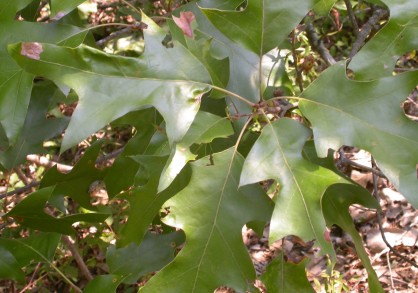
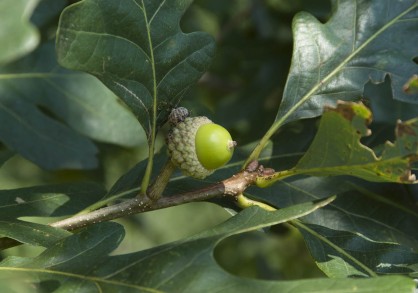
Oak is considered one of the most powerful and strongest of trees. It was traditionally the tree of choice for the yule log fire. The yule log was to be burned on the night of the winter solstice to symbolically bring light into the darkness. It also is a holdover of the ancient pagan tradition of having a bonfire on the night of the winter solstice, which was to encourage the sun to return.
Mistletoe
I love mistletoe and the story and traditions around it. There’s a wonderful story of Norse mythology about the god Balder. Balder was the son of Odin and Frigg. He was the god of light, love, peace, and happiness. His mother Frigg made all the plants in the world swear never to harm her son, but she overlooked mistletoe. So the mischievous god Loki fashioned a dart or arrow out of mistletoe and used it to kill Balder.
Thereafter it was decreed that mistletoe would be a symbol of returning love and light to the world, not a symbol of death. Any two people who happen to meet by chance under a ball of mistletoe were obliged to lay down their weapons and forgo their conflicts, and in some versions of the story, even exchange a kiss in honor of Balder.
Winter solstice traditions with their connection to the cycle of life and death and rebirth are important to many spiritual and religious traditions around the world. There is also a lesson from nature that we can learn if we’re open to it: there’s always a little darkness before the dawn. You can’t have the rebirth of spring without the death of winter. That’s a hopeful thing. We can take heart that there is hope for the light returning in the spring.
Kevin Moss, now retired, was the long-time student and public engagement coordinator for Cornell Botanic Gardens