Today is set aside to honor generations of Americans who served in the armed forces. Its origins can be traced to World War I, marking this day in 1918 when a temporary ceasefire, or armistice, took effect between the Allied nations and Germany. Many other nations also hold November 11 as a day of remembrance for those who served.
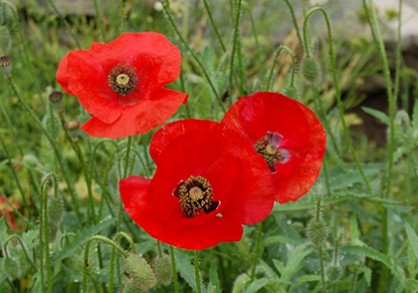
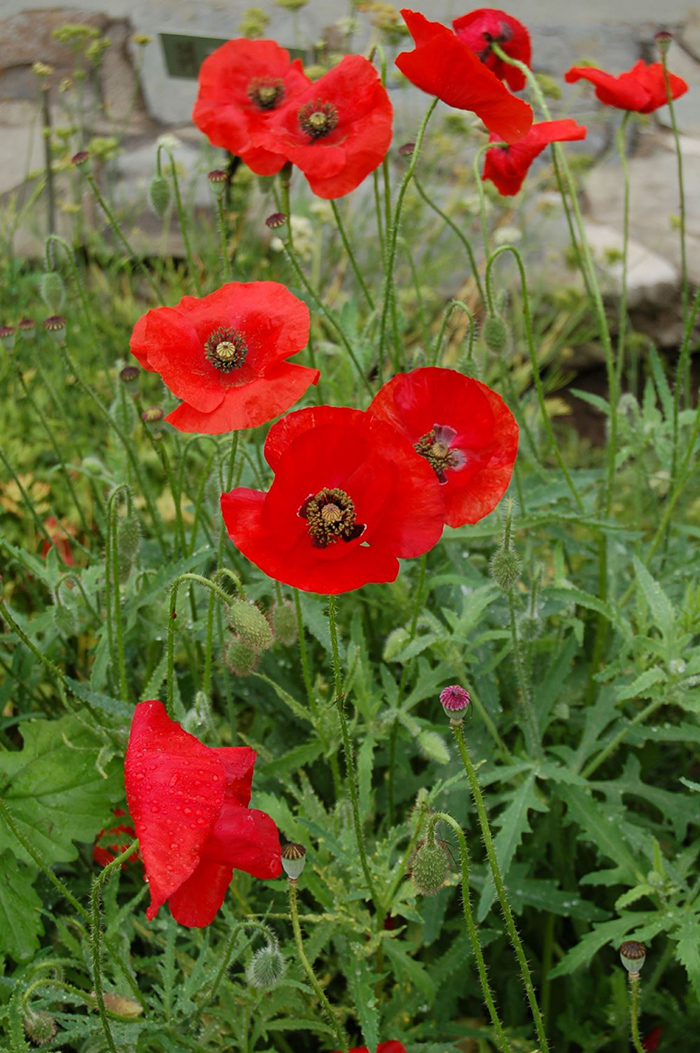
The field poppy (Papaver rhoeas) became a widespread symbol of remembrance and honor for military personnel who died in war, also following World War I. Beginning in 1921 and continuing today in the U.S., Great Britain, Canada, New Zealand, and Australia, paper poppies are sold to commemorate soldiers killed in battle, and the money raised supports veterans and their families.
How did the poppy become a symbol of remembrance?
Soldiers fighting on the Western Front during World War I traversed vast, disturbed agricultural and forest lands hauling heavy artillery, which awakened dormant poppy seeds under the soil. In the warm early spring of 1915, bright red flowers began peeking through this battle-scarred land. Soldiers trekking through fields covered with bright red blooms received a morale boost and some sent the dried flowers home with letters to loved ones.
The image of these brilliant red flowers springing up amidst the devastation inspired Colonel John McCrae of Canada to immortalize this poppy in his famous poem “In Flanders Fields.” Written as if it was being spoken by soldiers, it begins:
“In Flanders fields the poppies blow
Between the crosses row by row
That mark our place; and in the sky
The larks, still bravely singing, fly
Scarce heard amidst the guns below…”
Colonel McCrae’s poem was first published in December, 1915 in the London-based magazine Punch.
After reading McCrae’s poem, American professor Moina Michael was inspired to create artificial poppies for people to wear on their lapels as a symbol of remembrance. At the same time, French humanitarian Anna Guérin promoted the red poppy as a memorial symbol and fundraising tool for veterans. In 1920, Guérin was invited to address the American Legion at a convention to discuss her idea of an "Inter-Allied Poppy Day." Following the convention, the American Legion adopted the poppy as its memorial flower and committed to support Guérin in her planned U.S. Poppy Day, which took place the week before Memorial Day in May, 1921, using silk poppies made by the widows and children of the devastated regions of France. By then, remembrance poppies became widely accepted by the Allied countries of World War I as a flower of remembrance to be worn on November 11, then known as Armistice Day.
Cornell's participation in World War I
During World War I, more than 9,000 Cornell students, faculty, staff, and alumni served in uniform, a remarkable figure for a university whose total enrollment was about 5,000 to 6,000 students. Cornell produced 4,598 commissioned officers for the war effort, more than any other American institution, including West Point.
The enduring role of poppies
Today in the United States, the poppy is worn more often on Memorial Day to commemorate the sacrifice of so many men and women who have given their lives in combat.
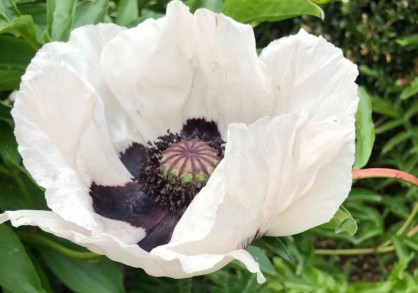
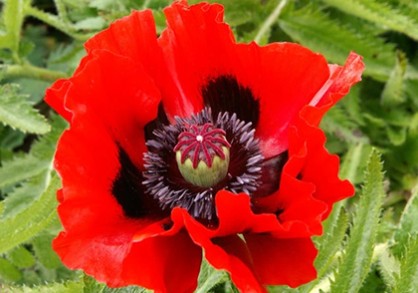
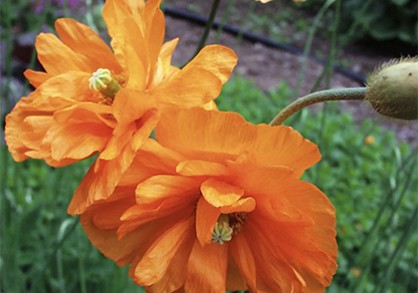
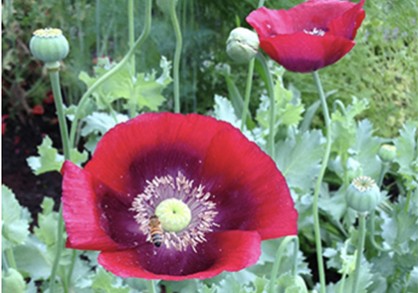
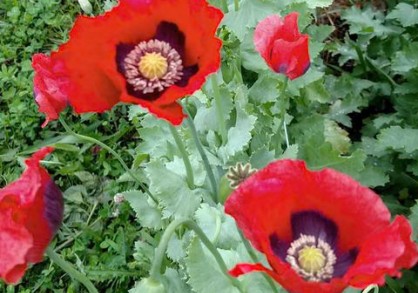
The field poppy (Papaver rhoeas) grows in the Robison Herb Garden and other species of poppy grow in the neighboring Young Flower Garden. Explore these plants and their locations at Cornell Botanic Gardens in the digital collection below.