

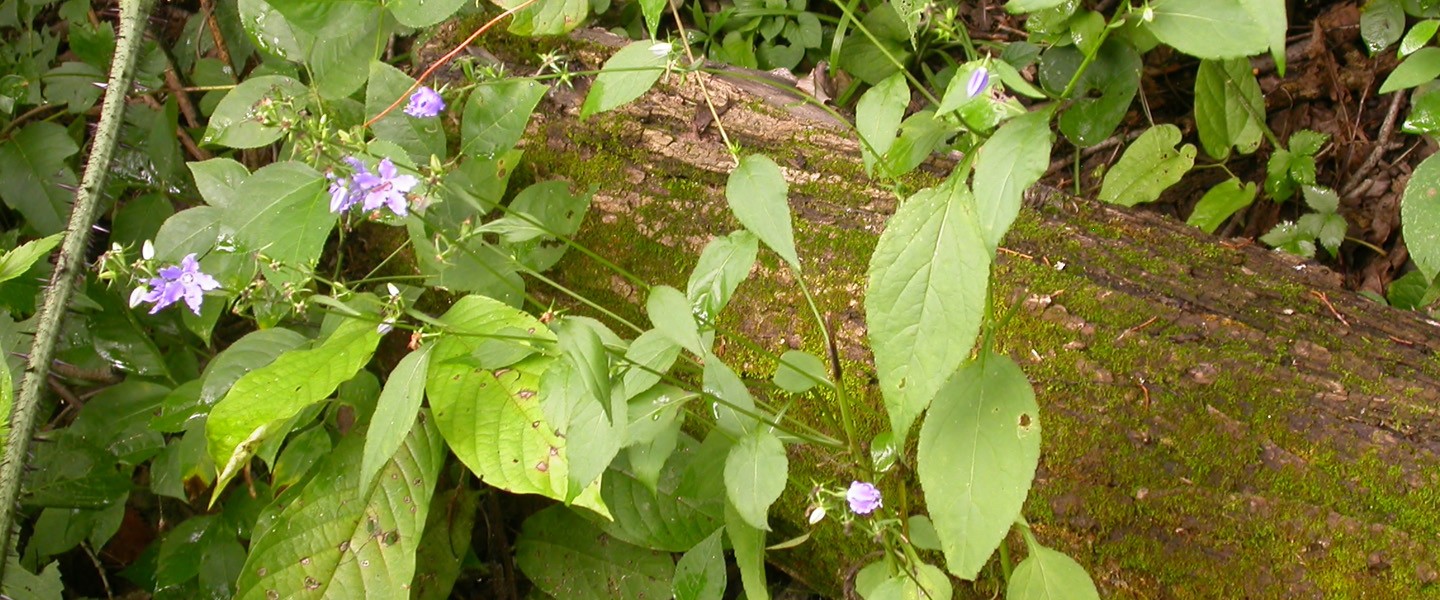
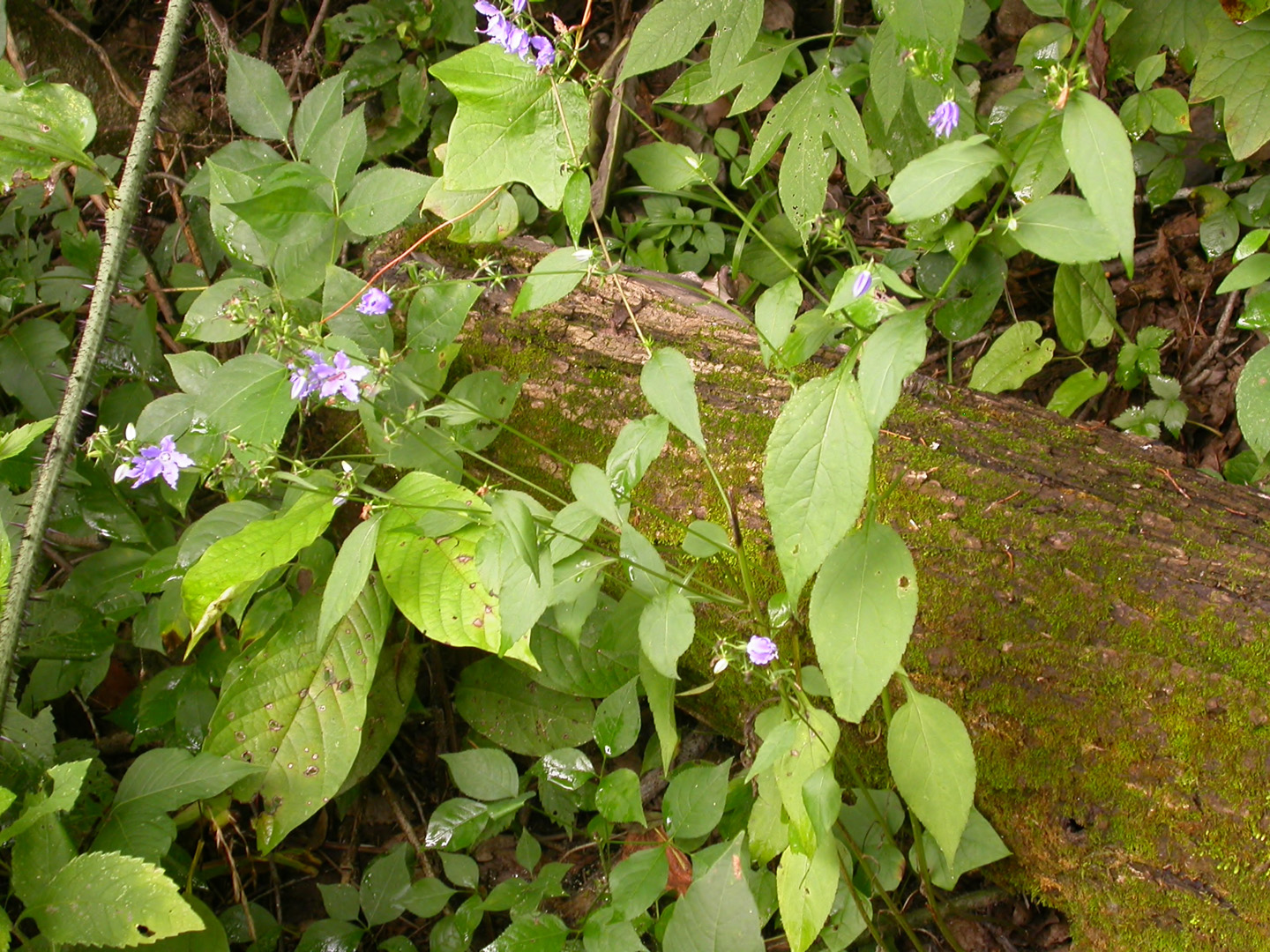
American Bellflower
Growth Habit
HerbaceousPropagation
Seed Treatment and Storage: Seeds need light to germinate. Surface sow in seed starting mix or similar medium. Moist cold stratify 30-60 days then bring to 70°F.
Biocultural Value
The Haudenosaunee prepared an infusion of smashed American bellflower roots and used it as a remedy for whooping cough. The Meskwaki prescribed the leaves for coughs and tuberculosis.
Wildlife Value
Long-tongued bees, such as bumblebees (Bombus spp.) and leaf-cutting bees (Megachilidae family), are American bellflower's primary pollinators. The specialist long-tongued bee Megachile campanulae only visits plants in the genus Campanula. Additional floral visitors include Halictid bees, butterflies, syrphid flies, and skippers. White-tailed deer occasionally eat American bellflower foliage.
Location
Mundy Wildflower GardenCultivation
Description
Erect annual or biennial to 1.8m tall; stem usually simple. Lower leaves rosulate, ovate-cordate, acuminate, petiolate, crenate, pubescent, upper leaves lanceolate, narrowed at both ends, dentate. Flowers in leaf axils, in racemes; calyx obconic, lobes linear; corolla rotate, lobes pubescent, pale blue to white.
Source of plant
PRAIRIE MOON

