

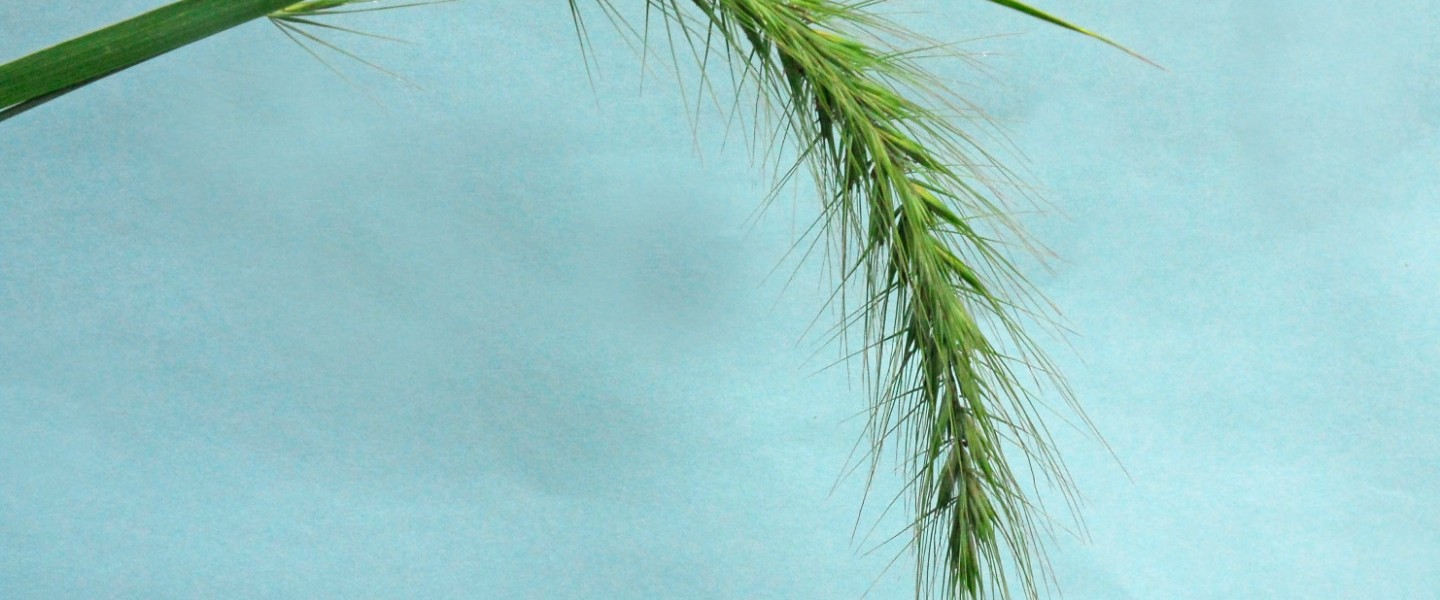
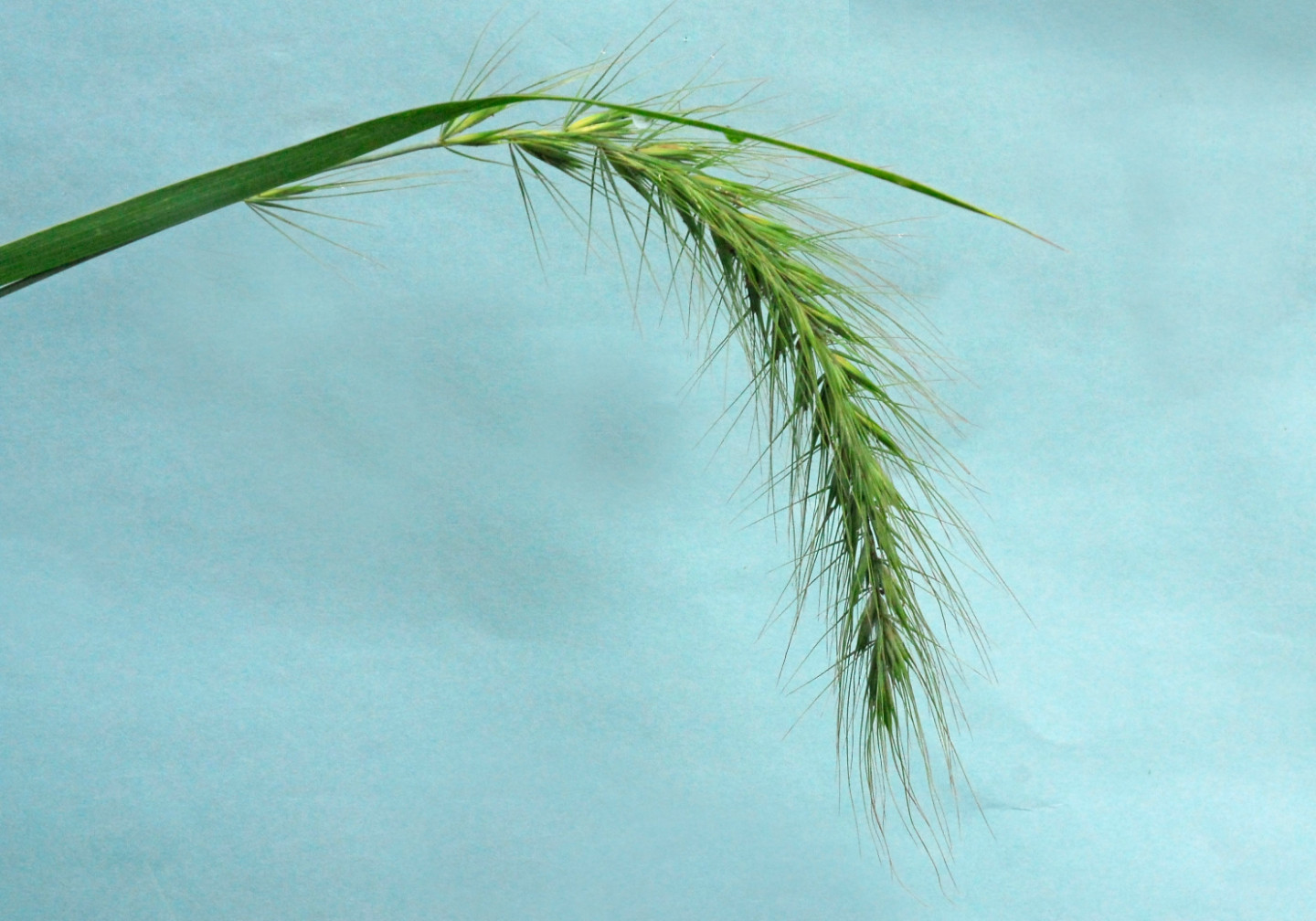
Canada Wild Rye Grass
Elymus canadensis
Poaceae
Propagation
Seed Treatment and Storage: Store seeds dry. No stratification needed for excellent germination.
Biocultural Value
The Haudenosaunee used a decoction of Canada rye and several other plants in a medicine to soak corn before planting. A compound decoction of the roots was taken for kidney ailments.
Wildlife Value
Canada rye flowers are wind pollinated. Leafhoppers (Commellus comma, Dorycephalus platyrhynchus, and Laevicephalus orientalis) feed on the foliage, while the larvae of a leaf beetle (Diabrotica barberi) feed on the roots. The young foliage is palatable to mammalian herbivores but the stiff-awned seed heads can be injurious to animals' tender mouths and cause digestive issues.
Location
Mundy Wildflower GardenCultivation
A 3-5' tall clump-forming grass with slightly spiraled arctic blue foliage. Large inflorescences with long, curling awns appear in August.
Light: full sun to part shade
Moisture and Soil: moist to dry
Status
L3|S5|G5

