

Dwarf Bush Honeysuckle
Growth Habit
ShrubBiocultural Value
The Haudenosaunee and several other Native American groups used bush honeysuckle as a blood medicine, urinary aid, diuretic, and laxative.
Wildlife Value
A variety of short- and long-tongued bees, butterflies, skippers, and moths visit bush honeysuckle to suck nectar and/or collect pollen. These include honey bees (Apis mellifera), bumble bees (Bombus spp.), Megachilid bees (Megachile spp.), Halictid bees (Halictus spp., Lasioglossum spp.), orange sulphur butterflies (Colias eurytheme), Peck's skipper buterflies (Polites peckius), and snowberry clearwing moths (Hemaris diffinis). Insect larvae feeding on and/or living in the foliage and stems include the bush honeysuckle bud midge (Sphondylia diervillae), bush honeysuckle stem midge (Neolasioptera caulicola), and a leaf miner fly (Phytomyza persicae).
Location
Edwards Lake Cliffs Preserve, Fall Creek Gorge, Ringwood Ponds, Mundy Wildflower GardenCultivation
Description
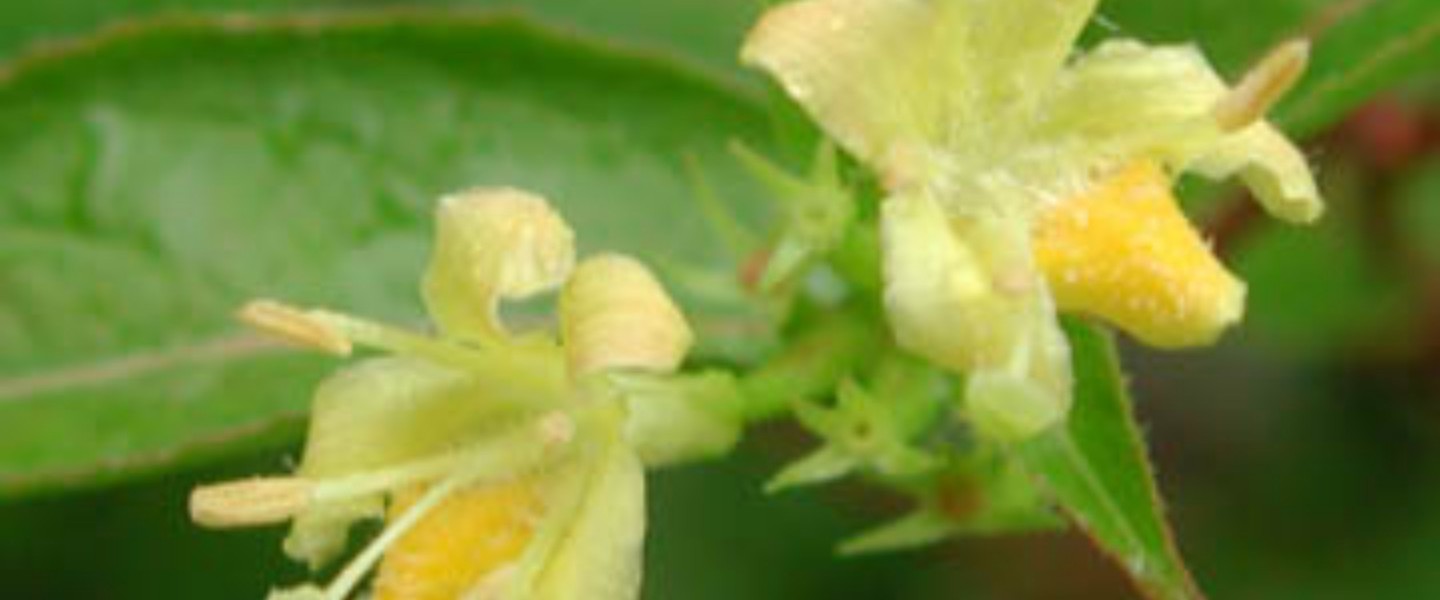
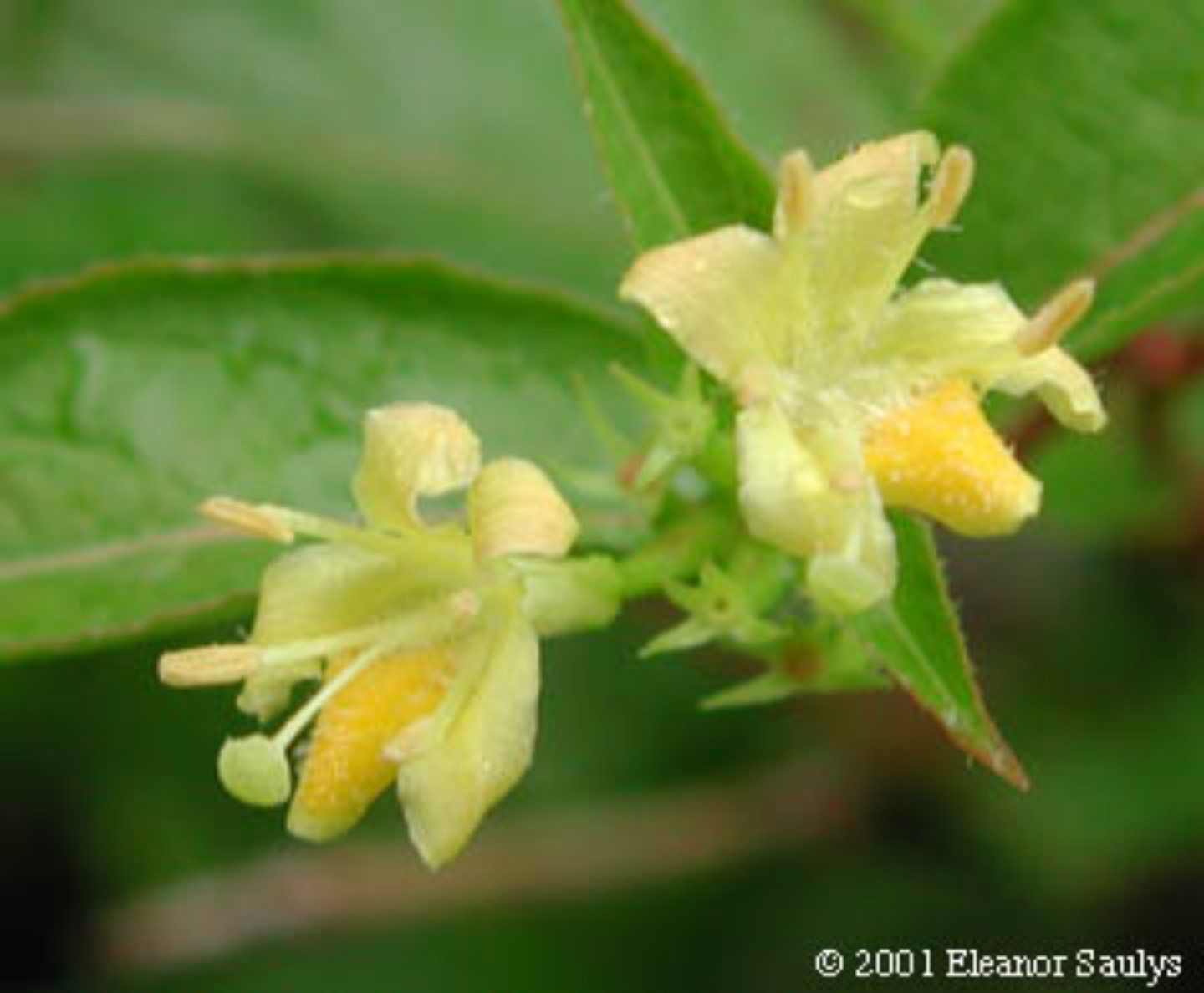
Diervilla lonicera, commonly known as bush honeysuckle, is a suckering, densely branched, deciduous shrub that typically grows to 3' tall and to 4' wide. It is native to dry rocky open woodland areas and thickets from Newfoundland to Saskatchewan south to North Carolina, Tennessee and Iowa. It is noted for its small shrubby form, yellow trumpet-shaped flowers, dark green leaves and fall color. Tube-like flowers (each to 1/2" across), resembling the flowers of true honeysuckle (genus Lonicera), bloom in panicles (cymes) in late spring to early summer (June-July). Plants are self-sterile (seed set requires pollination from a nearby plant). Flowers give rise to fruits (dry woody dehiscent capsules). Ovate to oblong-lanceolate, pointed, opposite, glossy green leaves (to 2-5" long) with fine marginal teeth turn interesting shades of yellow to orange sometimes changing to red in fall.
Source of plant
Cornell Botanic Gardens

