

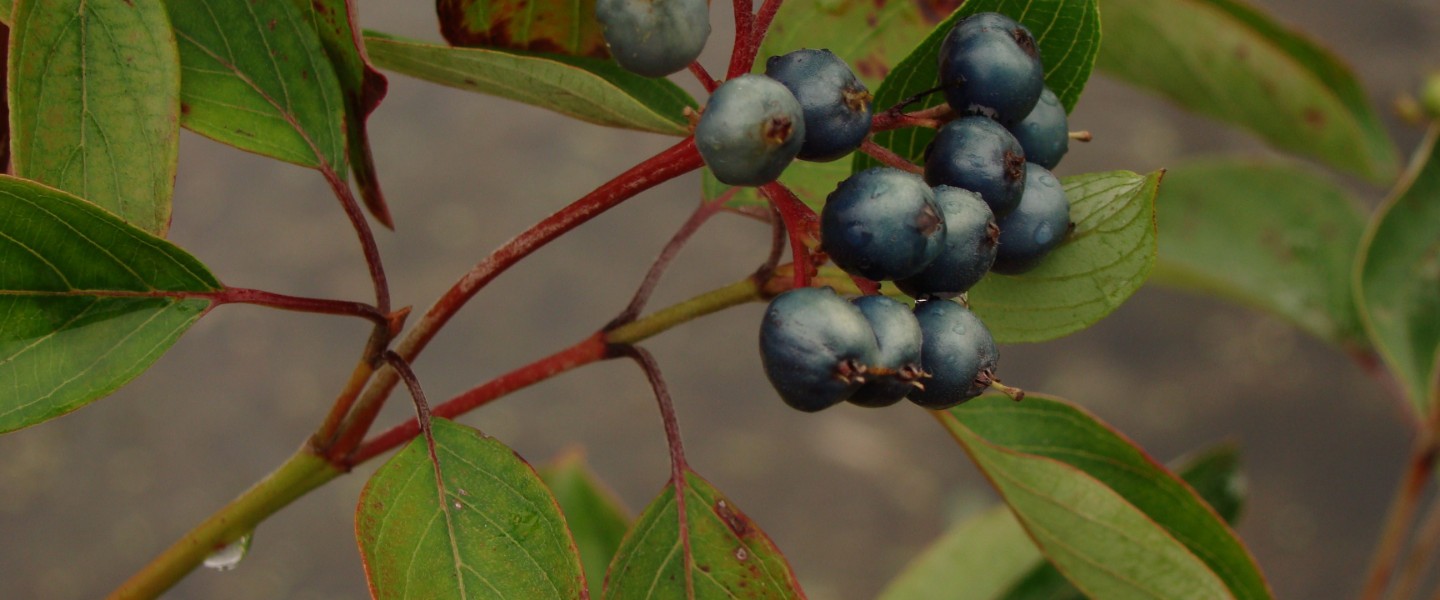
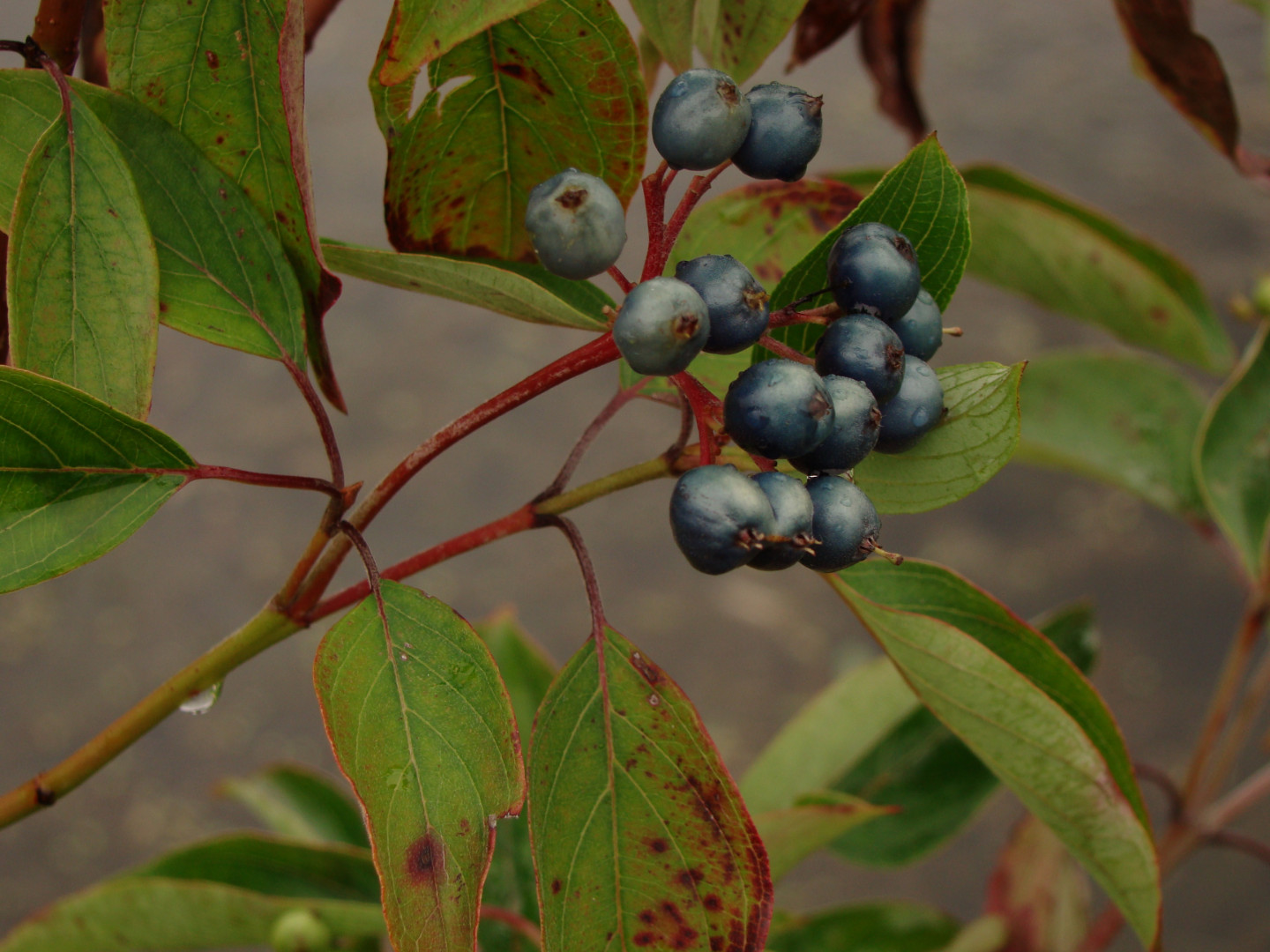
Silky Dogwood
Growth Habit
ShrubPropagation
cold/moist stratification, may be double dormancy
Biocultural Value
The dried root-bark is antiperiodic, astringent, stimulant (mild), tonic. The flowers are said to have similar properties. A tea or tincture of the astringent root bark is used as a quinine substitute and also in the treatment of chronic diarrhea. It can be employed in the treatment of painful urination, chest congestion etc. The bark is also used as a poultice on external ulcers and as a wash for gonorrhea sores. The glycoside "cornin" found in the bark has astringent properties. The fruit is used as a bitter digestive tonic. A tincture of them is used to restore tone to the stomach in cases of alcoholism.
Wildlife Value
It is the host plant for the spring/summer Azure butterflies. Butterflies nectar at its blooms. Its fruits are eaten by songbirds, ruffed grouse, quail, turkey, chipmunks, black bear, foxes, white-tailed deer, skunks, and squirrels. The foliage is browsed by white-tailed deer. Members of the genus Cornus support the following specialized bees: Andrena (Gonandrena) fragilis, Andrena (Gonandrena) integra, and Andrena (Gonandrena) platyparia.
Location
Fall Creek Gorge, Purvis Road Wetlands Natural Area, Mundy Wildflower GardenCultivation
p shade - sun, reg- moist
Description
Plants 6' to 10' in height and spread. Rounded, multi-stemmed shrub, usually twiggy and round-topped in youth, becoming open with age, often straggly, unkempt, and without ornamental appeal. Fall colorusually green to brown, although it can be reddish purple, but is not spectacular. Young branches reddish purple, sometimes greenish; older wood is brownish purple and develops fissured areas.
Source of plant
Mount Cuba Center, Princeton Nurseries, Ruth Nix

